Trowulan · Mojokerto · 13th–15th Century

Majapahit
Legacy

"The greatest empire Southeast Asia has ever known — and East Java holds its bones."

1293Founded
1527Final Fall
11Countries Influenced
UNESCOCandidate Site
234 yrsEmpire Duration
11Nations Under Influence
1293 CEYear of Founding
40+Archaeological Sites
PrivateExpert Guide
The Destination

Southeast Asia's
greatest lost empire

Between 1293 and 1527 CE, the Majapahit Empire governed a vast maritime realm stretching from Sumatra to Papua — influencing the religion, art, language, and governance of what would become Indonesia, Malaysia, Singapore, Brunei, and the Philippines. At its peak, Majapahit's capital, Trowulan, was a city of extraordinary sophistication — home to an estimated one million people, fed by an intricate irrigation system, and adorned with temples of red brick built without mortar.

Trowulan today is an open archaeological landscape — 100 square kilometres of paddy fields, villages, and excavation sites scattered across the flat plains of Mojokerto regency. What remain are the red-brick ruins of Candi Brahu, the monumental gateway of Candi Wringinlawang, the royal bathing pools of Kolam Segaran, and dozens of smaller temples emerging from the soil.

The Journey operates this experience exclusively as a private guided day tour with a historian-trained guide who can bring these stones alive — connecting the fragments of an empire to the literature, legend, and political philosophy that made Majapahit the defining civilisation of the Indonesian archipelago.
◆ UNESCO Candidate ◈ Historian Guide ◉ 40+ Sites ★ Day Tour
Ancient Majapahit temple ruins in Trowulan

Candi Brahu · Trowulan Archaeological Complex · Mojokerto

The Archaeological Complex

Key Heritage Sites

A private guide allows you to linger where the history demands it — and move on when it is ready for you.

Candi Brahu
◆ 14th Century · Funeral Temple

The oldest and best-preserved temple in the Trowulan complex — a slender red-brick tower whose original function was the cremation of Majapahit royalty. The brickwork, laid without mortar using a volcanic mineral adhesive, has survived seven centuries with remarkable integrity. Your guide will explain the Hindu-Buddhist cosmological symbolism encoded in every tier.

Candi Wringinlawang
◆ 14th Century · Royal Gateway

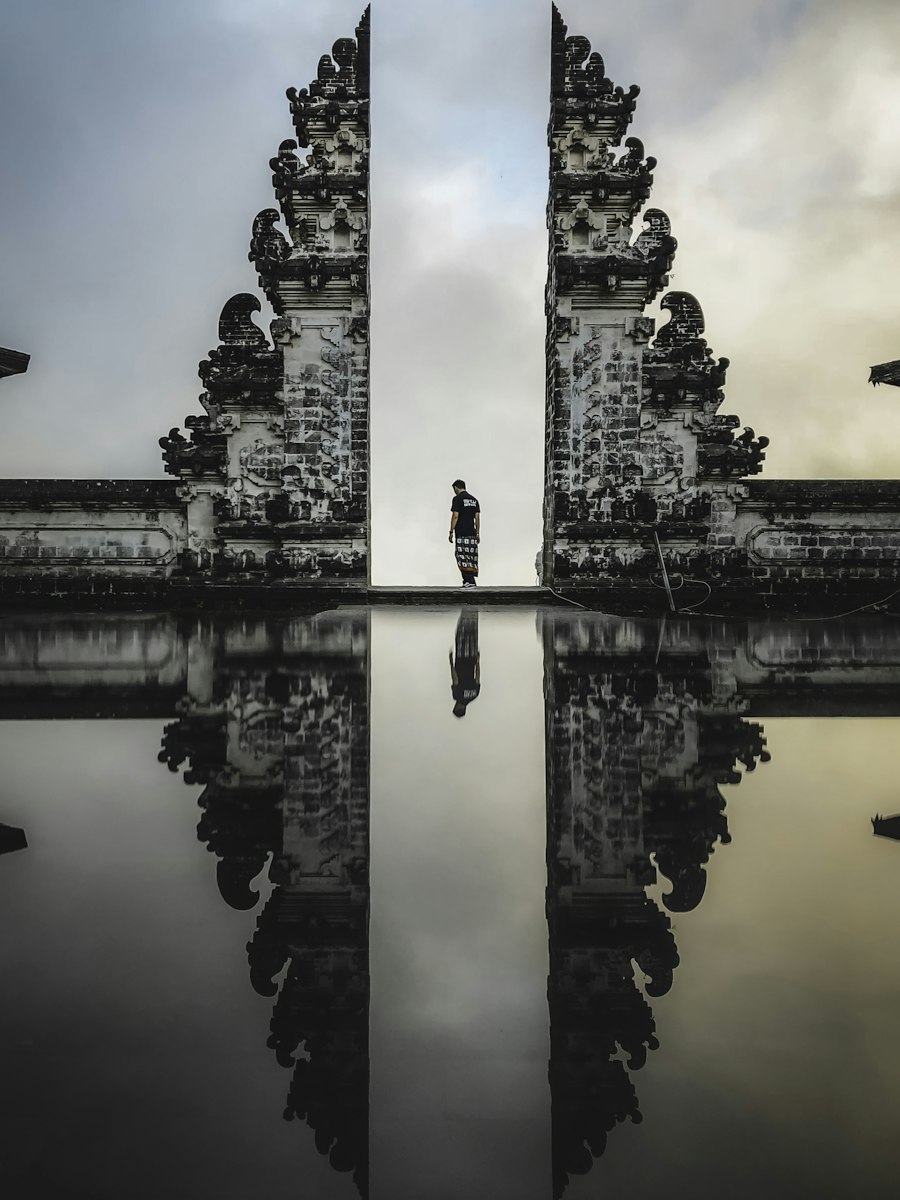
A towering split-gate — the classic Javanese candi bentar form — that once marked the entrance to a royal or religious compound. The gates' two halves, identical in profile but separated by a wide stone-paved entrance, create a dramatic frame. Standing within it, you are standing in the exact footprint where Majapahit officials, priests, and royalty walked for two centuries.

Kolam Segaran
◆ 14th Century · Royal Bathing & Recreation Pool

A vast artificial reservoir — 375 metres long and 175 metres wide — constructed of fired brick with a surrounding veranda, believed to have been used for royal recreation, ceremonial bathing, and possibly model naval exercises. It is one of the largest hydraulic structures of the medieval period anywhere in Southeast Asia, and remains filled with water today.

Trowulan National Museum
◆ Collection of 10,000+ Artefacts

The definitive repository of Majapahit material culture — gold jewellery, terracotta figurines, bronze ceremonial vessels, inscribed stone tablets, and the famous Ganesha sculpture from the royal court. Your historian guide transforms these objects from museum exhibits into living evidence of a civilisation's sophistication, trade network, and daily life.

Candi Bajang Ratu
◆ 14th Century · Royal Gate of the Inner Palace

The most architecturally refined structure in the complex — a tall, slender red-brick gate with elaborate kala face carvings and relief panels depicting scenes from the Ramayana epic. The gate is believed to be associated with the young king Jayanegara, who was carried through it on his coronation. Its proportions are extraordinarily elegant, especially in the low light of early morning.

Artisan Villages
◆ Living Heritage · Terracotta & Tile Craft

Trowulan's villages continue a craft tradition unbroken since the empire — producing red-brick tiles, terracotta figurines, and ornamental bricks using the same fired-clay techniques their ancestors used to build the empire's monuments. A visit to a working artisan workshop, arranged privately by your guide, connects the archaeological past to a living present in a way no museum can replicate.

The Private Day Tour

A Day in the Empire

The tour is structured to move with historical narrative — from foundation through peak to legacy — rather than mere geography.

07:30Morning
Depart Surabaya or Malang
Your private vehicle collects you from your hotel. The drive to Trowulan takes 60–90 minutes through East Java's agricultural flatlands — a landscape little changed from the empire's agricultural heartland. En route, your guide introduces the Majapahit story: its founding, its peak under Hayam Wuruk and Gajah Mada, and its decline.
09:00Morning
Trowulan Museum — Context First
Begin at the National Museum to build historical context before entering the field. Gold, bronze, and terracotta artefacts from excavations across Trowulan establish the scale and sophistication of Majapahit civilisation. The famous Ganesha and the golden jewellery fragments from the royal treasury are particularly affecting.
10:00Morning
Candi Brahu — The Royal Cremation Temple
The oldest standing structure in the complex. Your guide explains the funeral rites of Majapahit royalty — the Hindu-Buddhist cosmological belief system that informed how kings passed from one world to another — and the extraordinary brick technology that kept this tower intact for 700 years.
11:00Morning
Candi Bajang Ratu & Candi Wringinlawang
Two of the most photogenic structures in the complex — the refined Bajang Ratu coronation gate, and the monumental split-gate of Wringinlawang. The afternoon light on their red brick is remarkable. Your guide reads the carved relief panels aloud, translating scenes from the Ramayana visible on the stone.
12:30Midday
Lunch — Local Mojokerto Cuisine
A private lunch at a selected local restaurant serving traditional Mojokerto dishes — rawon (black beef broth), lontong kupang (mussel porridge), and fresh coconut water. Your guide continues the conversation about what daily life in the empire's capital might have looked like.
14:00Afternoon
Kolam Segaran & Artisan Village
Walk the perimeter of the great royal reservoir — an engineering achievement that still holds water 700 years on — then visit a working terracotta artisan workshop where craftspeople continue the empire's brick-making tradition. You may commission a piece to take home. Return to Surabaya or Malang by late afternoon.
Why Majapahit Matters

The Empire's Legacy

🏛️
Political Reach
At its 14th-century peak under King Hayam Wuruk and his prime minister Gajah Mada, Majapahit claimed or influenced territories across what is now Indonesia, Malaysia, Singapore, Brunei, southern Thailand, and the Philippines. The Nusantara concept — the unified archipelago — originates with Majapahit's political vision.
📜
Literary Achievement
The Majapahit court produced some of the greatest works of Old Javanese literature — the Nagarakretagama (a verse chronicle of the empire by the court poet Prapanca, 1365 CE) and the Sutasoma (which contains the phrase Bhinneka Tunggal Ika, now Indonesia's national motto: "Unity in Diversity").
🔱
Religious Synthesis
Majapahit perfected the Javanese synthesis of Hindu and Buddhist traditions — Siwa-Buddha — in which Shiva and the Buddha were understood as different aspects of the same supreme divine being. This philosophical flexibility allowed the empire to govern a religiously diverse archipelago, and echoes in Indonesian religious pluralism today.
Essential Knowledge

Before You Depart

🌡️
Climate & Best Time
  • Year-round destination — Trowulan is accessible in all seasons
  • Dry season (Apr–Oct): Clearer light, less humidity, preferred
  • Daytime temperature: 28–35°C — lightweight clothing and hat essential
  • Morning start: Recommended — sites are cooler and less busy before noon
👟
Physical Requirements
  • Walking level: Easy — flat terrain, paved paths between sites
  • Total walking: Approximately 3–5 km across the day at a leisurely pace
  • Suitable for all ages and fitness levels
  • Comfortable closed-toe shoes recommended — some uneven stone ground
🎒
What to Bring
  • Lightweight, modest clothing (shoulders/knees covered at temple sites)
  • Sun hat and sunscreen — sites are largely unshaded
  • Camera — the red brick in morning light is extraordinary
  • Notebook — there is much worth recording here
  • Water — your guide carries additional supplies
What We Provide
  • Private air-conditioned vehicle (Surabaya or Malang ↔ Trowulan)
  • Expert historian-trained English-speaking guide throughout
  • All museum and site entrance fees
  • Private lunch at selected local restaurant
  • Bottled water and light snacks
  • Curated printed background reading material on Majapahit
Walk Among the Ruins

Reserve Your Private
Majapahit Day Tour

Few visitors to East Java make time for Trowulan. Those who do describe it as the most intellectually rewarding experience of their journey — the moment when Indonesia's history stops being background and becomes foreground.

Responds within 12 hours · 100% Private · Expert guides since 2019

Continue the Journey

Other Destinations