The Expedition Atlas

Six Unmissable
Destinations

From Bromo's fire-crowned caldera and Ijen's midnight blue flames, to the greatest empire Southeast Asia has ever known — East Java holds a universe of wonder within its ancient volcanic arc.

6Curated Destinations
3,676mHighest Peak
700+Years of History
250km²National Park
100%Private Access
East Java Expedition Atlas

East Java's Finest Places

Six extraordinary destinations — each curated for depth, beauty, and the unmissable. Explored exclusively, at your pace, on your terms.
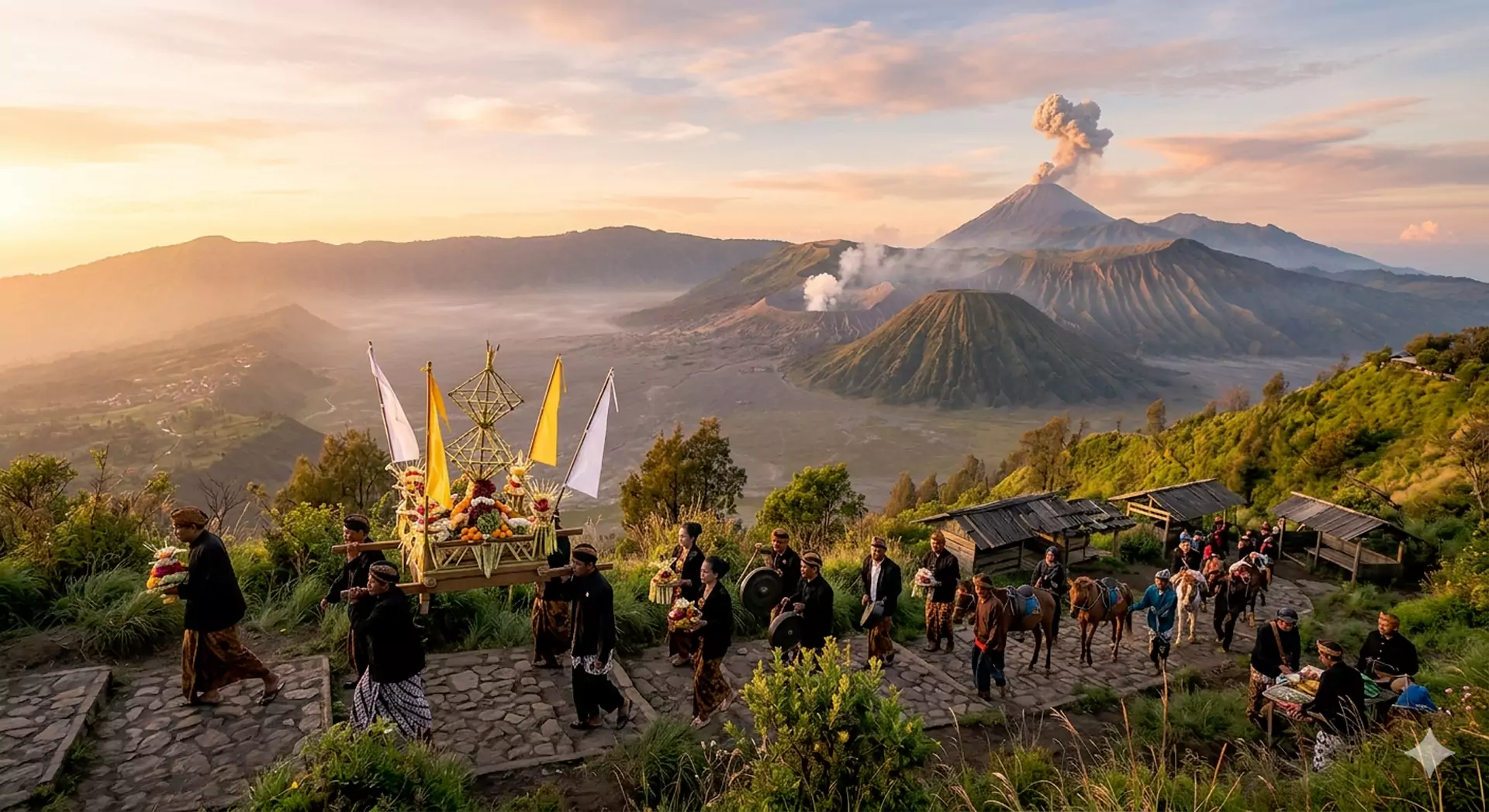
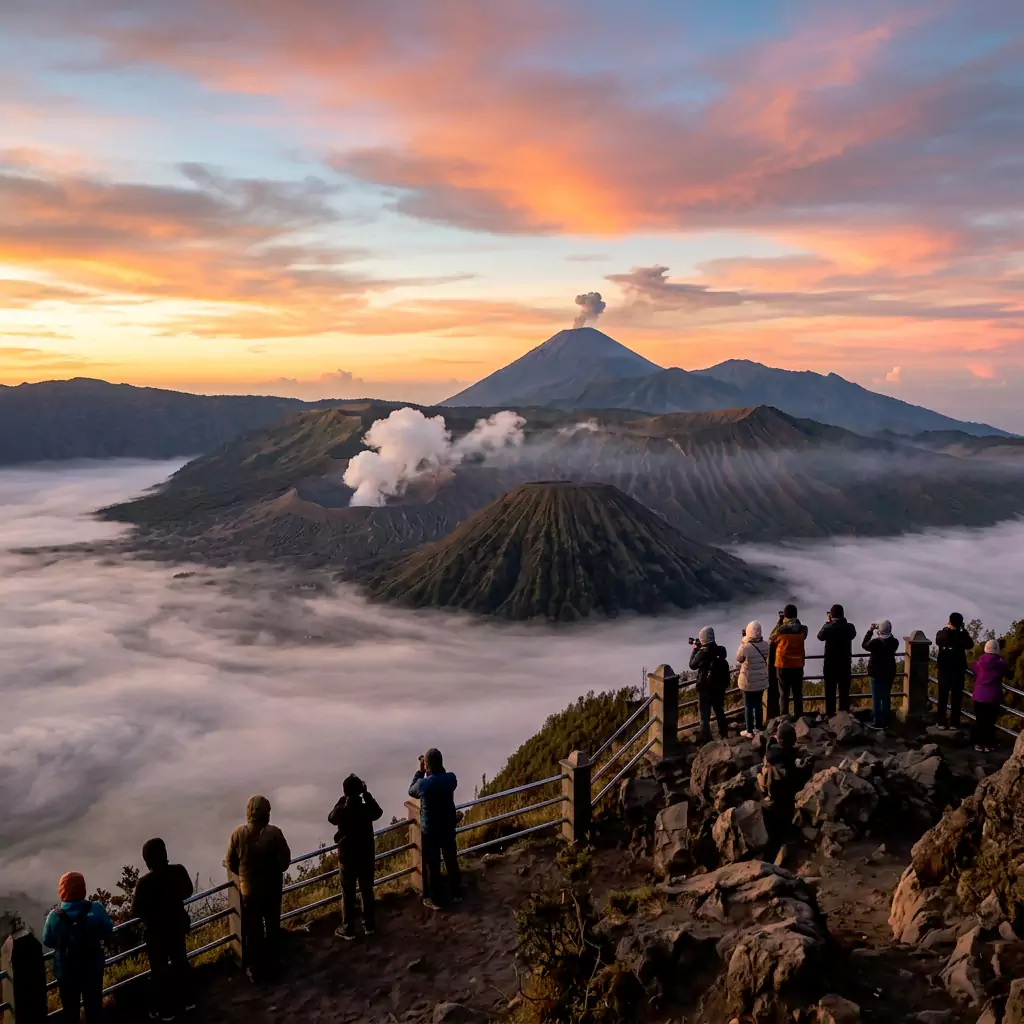
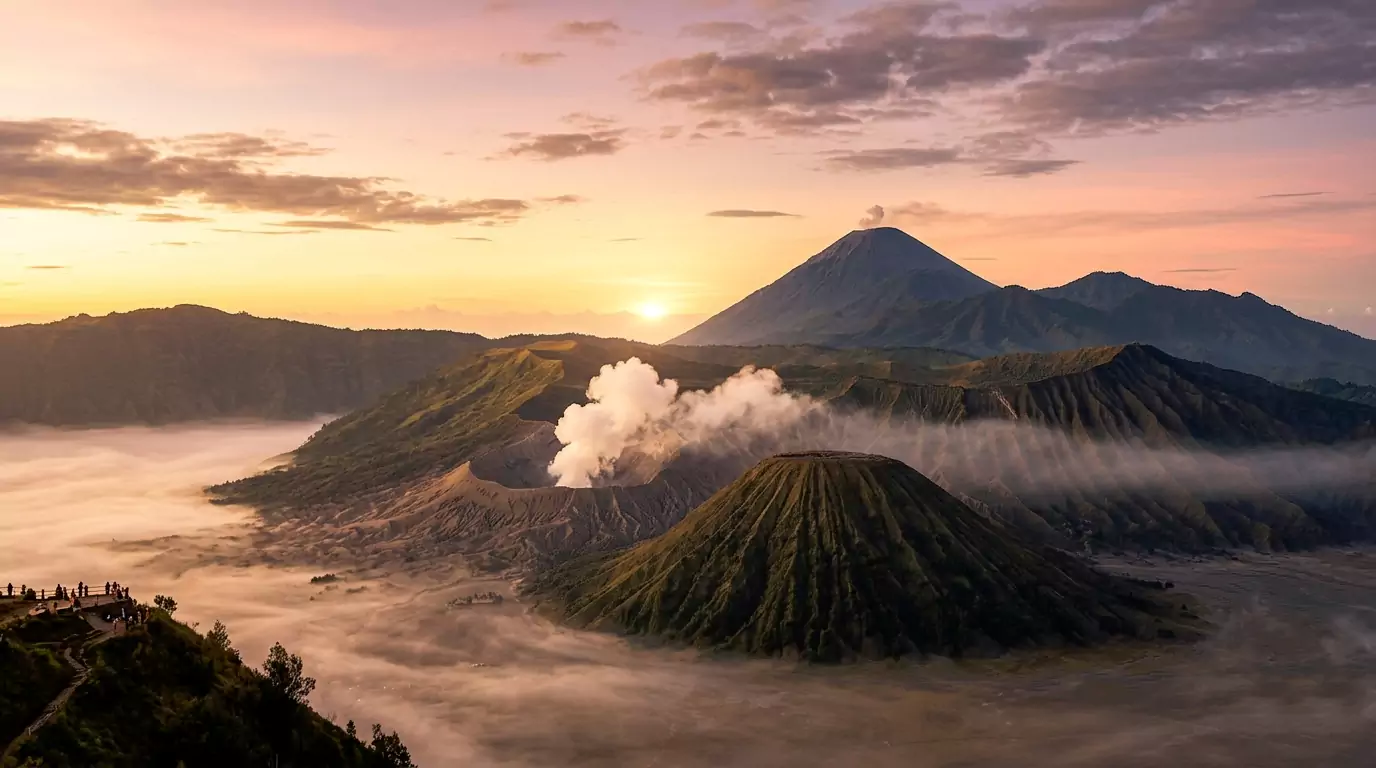
Mount Bromo at sunrise
East Java · Tengger Massif
Mount Bromo
2,329 m · Active Stratovolcano · Tengger Caldera

"To stand at the lip of Bromo's smouldering crater as the first light ignites the Tengger horizon is to understand why travellers cross entire hemispheres for a single sunrise."

Mount Bromo rises dramatically from the Tengger Sand Sea, a vast ash plain stretching 10 km across that forms the floor of the ancient Tengger Caldera. Flanked by Mount Batok and the towering Mount Semeru — Java's highest peak at 3,676 m — Bromo offers a landscape of almost alien grandeur. The volcano is permanently active, exhaling sulphurous plumes from its 800 m-wide crater.

The best-known vantage is Penanjakan Viewpoint, perched at 2,770 m, where the full panorama of the caldera and the distant Semeru eruption can be witnessed in one sweeping vista.

2,329mSummit Elevation
800mCrater Diameter
3–4°CPre-dawn Temp
◆ Active Volcano◈ 4WD Access◉ Sunrise Iconic★ Year-Round

"The Tengger people have watched over this sacred caldera for nearly a thousand years — and their devotion is woven into every grain of volcanic sand."

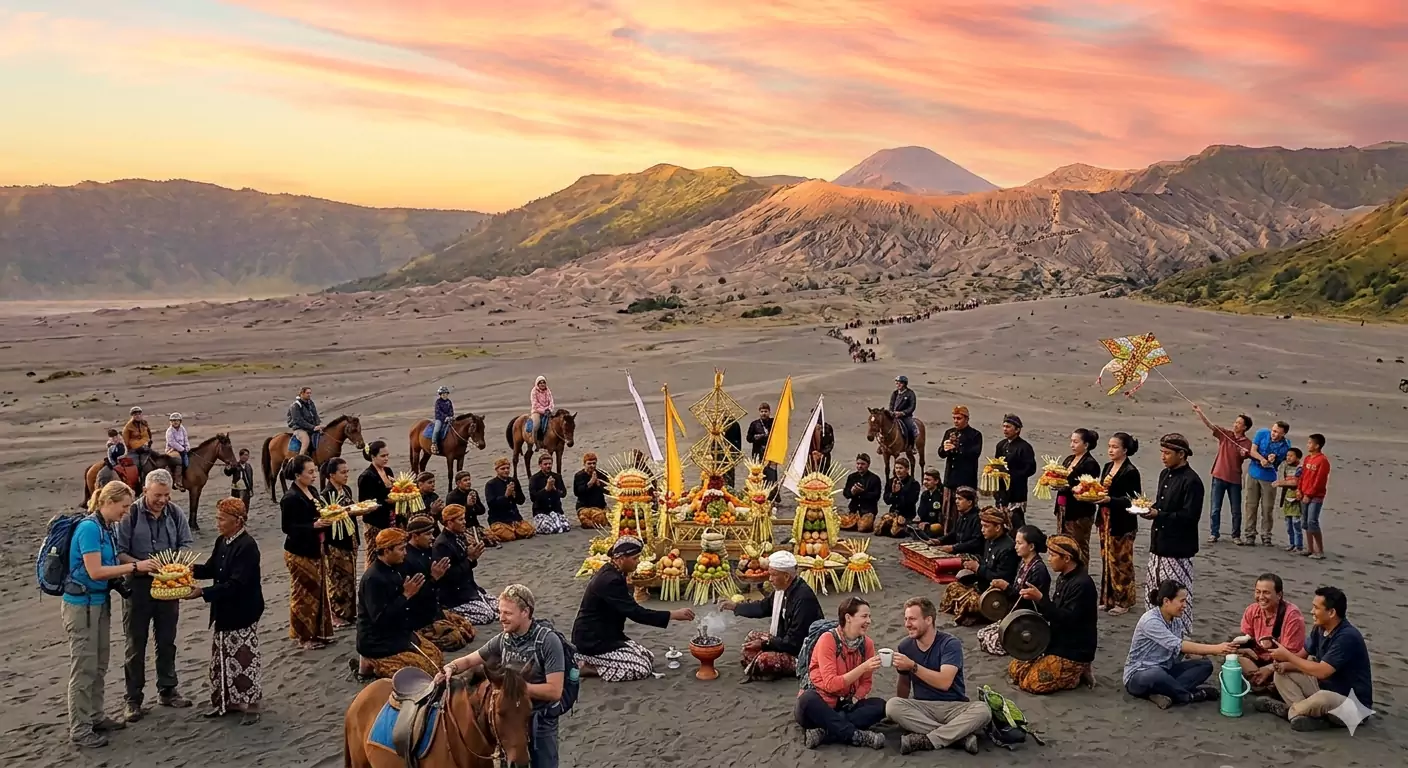
The Tengger people, believed to be direct descendants of the ancient Majapahit kingdom, are one of the few Hindu communities remaining on Java. Each year, the Yadnya Kasada festival draws thousands to Bromo's crater rim. Tenggerese worshippers climb through the night to make offerings of livestock, vegetables, and flowers — hurling them into the crater as an act of gratitude and supplication. This ceremony has continued without interruption for over 600 years.

📜
Kasada Ceremony
Held on the 14th day of the Tenggerese month of Kasada. The entire community ascends Bromo to offer prayers and cast gifts into the active crater — a ritual of extraordinary spiritual intensity.
🕌
Hindu Legacy on Java
Unlike the majority of Java's Muslim population, the Tengger maintain a unique Hindu faith blended with animistic traditions, preserving a cultural lineage that predates the Islamic sultanates.
◆ Cultural Spotlight

The village of Ngadisari, gateway to the caldera, remains a living museum of Tenggerese traditions. Local guides — many of whom are hereditary priests — share intimate knowledge of the mountain's spiritual geography.

A private Bromo expedition with The Journey unfolds across three distinct acts, each offering something the standard group tour cannot: time, silence, and exclusivity.
02:00Departure
Private 4WD Transfer
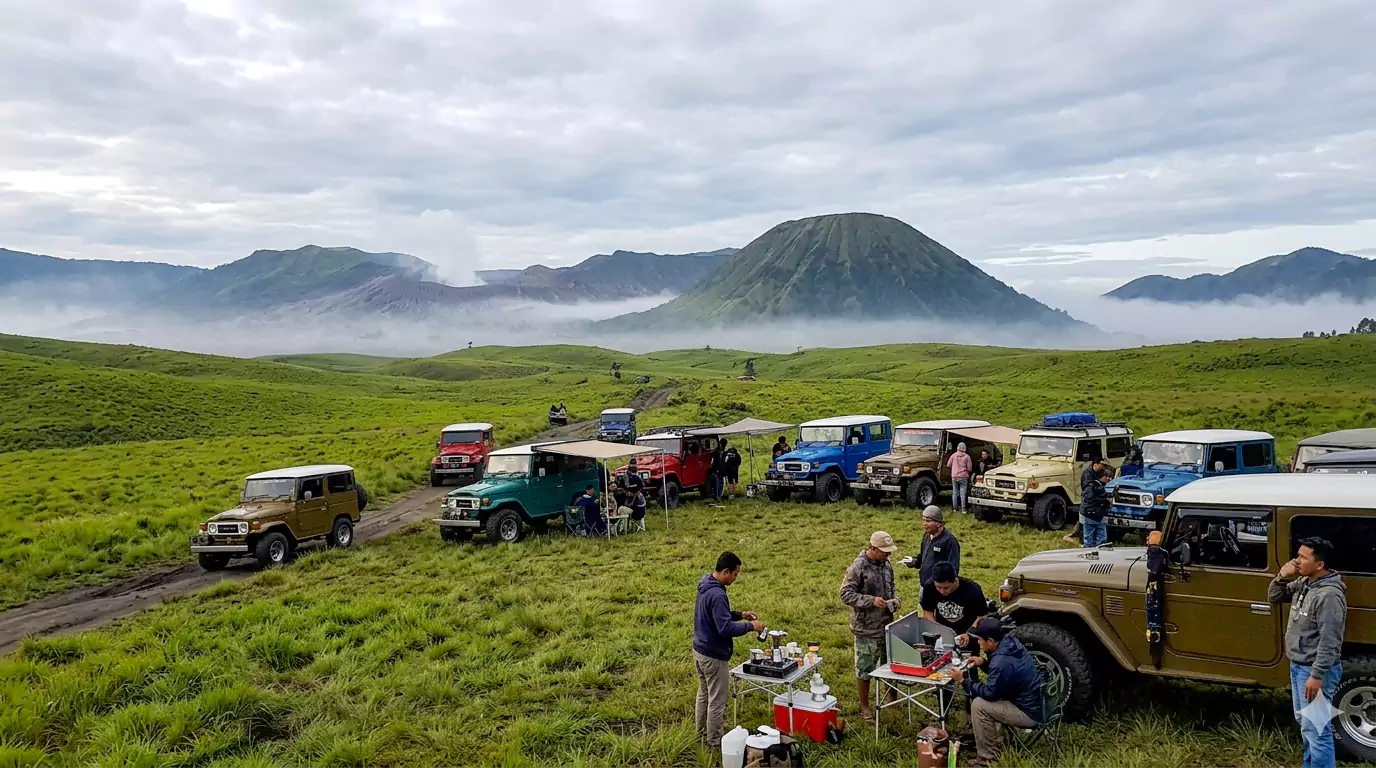
Your dedicated vehicle departs from Malang or Probolinggo. The cold, silent drive through sleeping villages across the volcanic plain is an atmospheric prelude.
04:00Golden Hour
Penanjakan Sunrise
Arrive at the viewpoint before the crowds. Watch Semeru erupt silently on the horizon as Bromo's caldera fills with amber light — a moment of complete awe.
06:30Descent
Crater Rim Trek
Jeep to the base of Bromo, then climb 253 steps to the crater rim. Stand above the sulphurous vent and peer into the volcanic throat below.
08:30Explore
Savanna Teletubbies & Sea of Sand
Wander the rolling green hills of the Teletubbies Savanna and traverse 10 km² of volcanic ash where jeep tracks carve ephemeral roads.
🌱
Ecological Significance
Bromo Tengger Semeru National Park covers 503 km² of montane forest, savanna, and volcanic terrain — one of Java's most critical biodiversity corridors, hosting the Javan hawk-eagle and leopard.
🤝
Community Economics
Tengger horsemen offer guided rides across the caldera, sustaining livelihoods for over 200 local families. The Journey supports these operators directly and exclusively.
📸
Photography Conditions
May–October delivers crystalline skies and perfect layered mist over the caldera at dawn. The dry season frames Bromo in amber tones unattainable at any other time of year.
♻️
Responsible Access
The Journey operates under the park's Leave No Trace charter. All vehicle movements respect designated routes, minimising caldera erosion in this fragile volcanic landscape.
Witness the Bromo SunriseIncluded in Bromo Sunrise, Combination, and Grand packages
Kawah Ijen Blue Fire
East Java · Banyuwangi Regency
Kawah Ijen
2,386 m · World's Largest Acidic Crater Lake · Blue Fire Phenomenon

"Nowhere else on Earth produces flames of pure electric blue in the open air. To witness Ijen's blue fire is to stand before one of nature's most surreal phenomena."

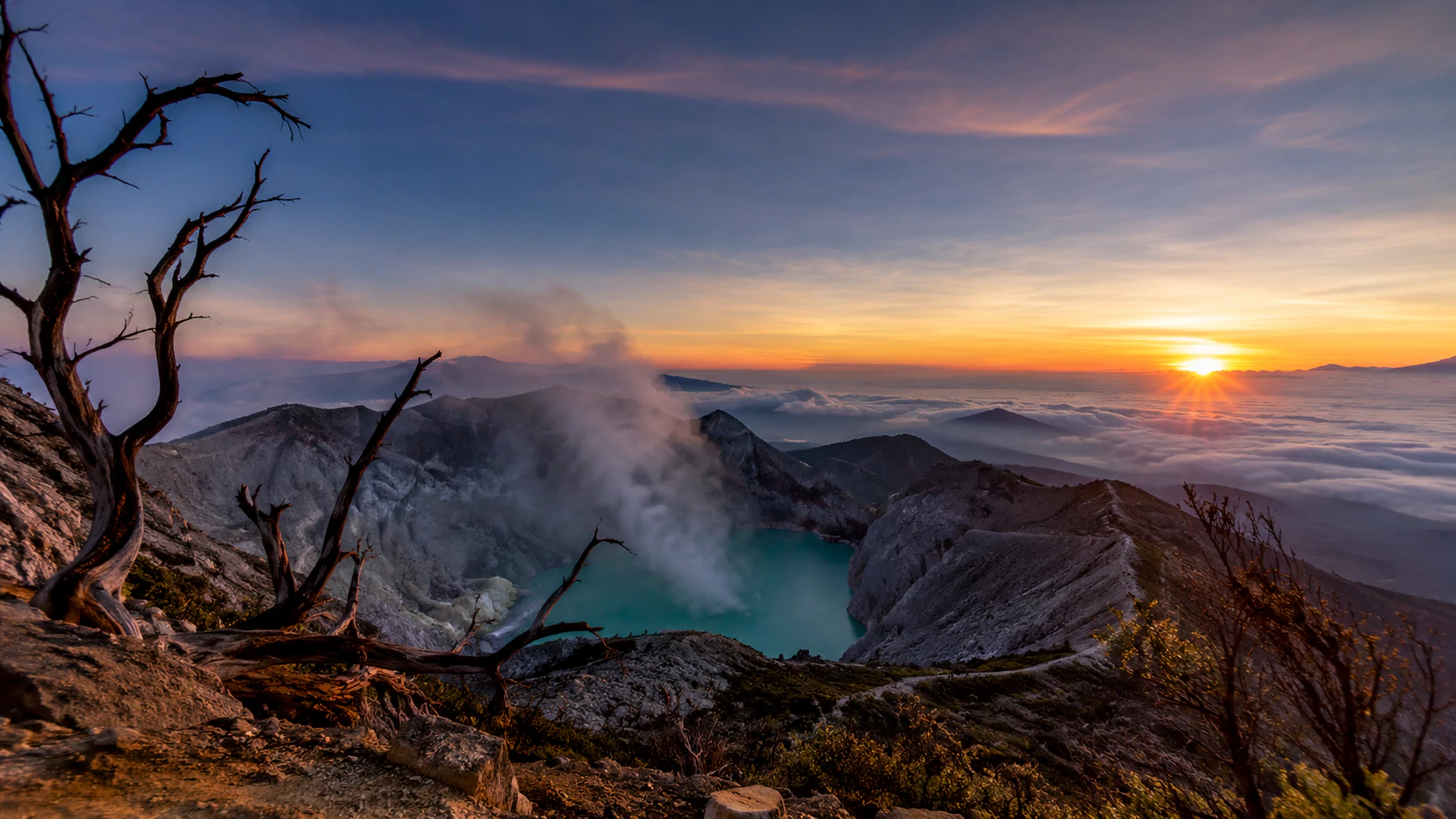
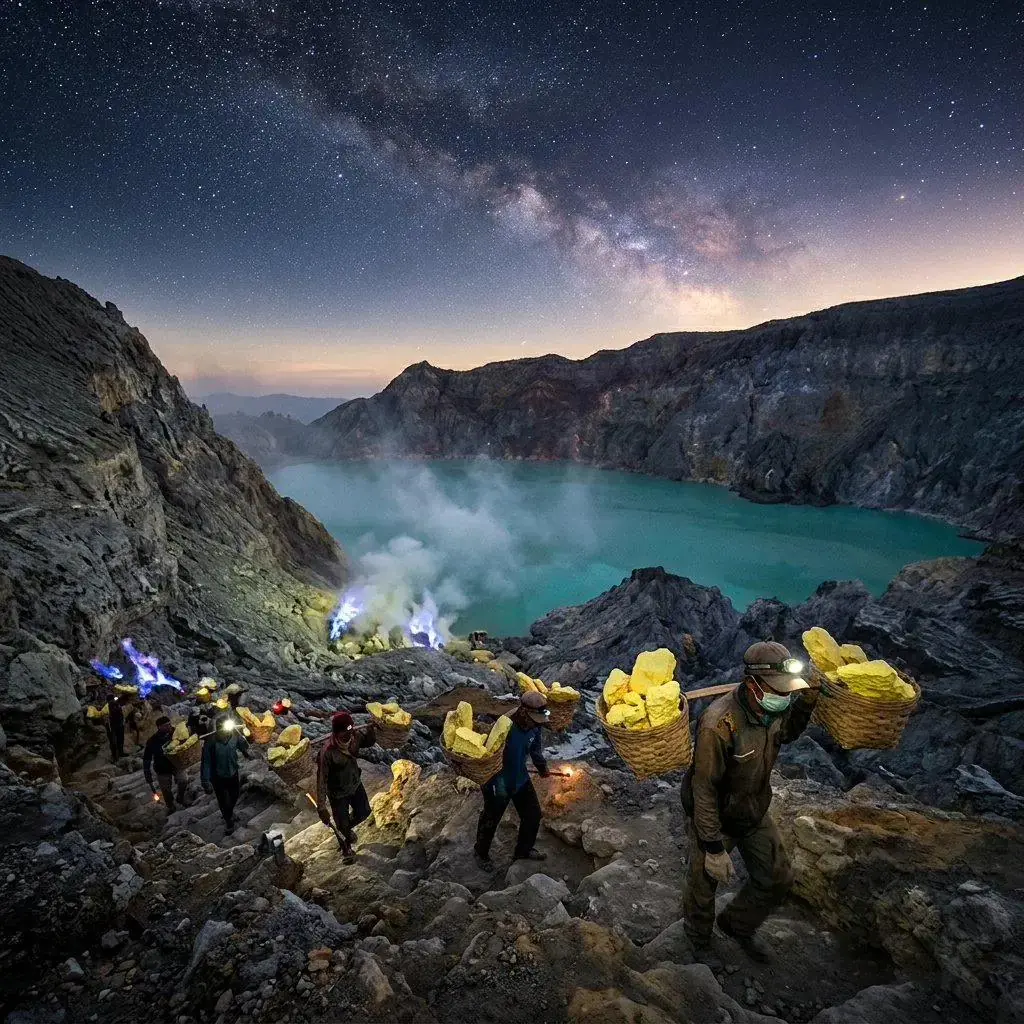
Kawah Ijen crowns the Ijen Plateau at 2,386 m, cradling the world's largest acidic crater lake — 200 m deep, filled with turquoise water so corrosive it dissolves metal. The lake's pH approaches zero, making it one of the most extreme environments on the planet.

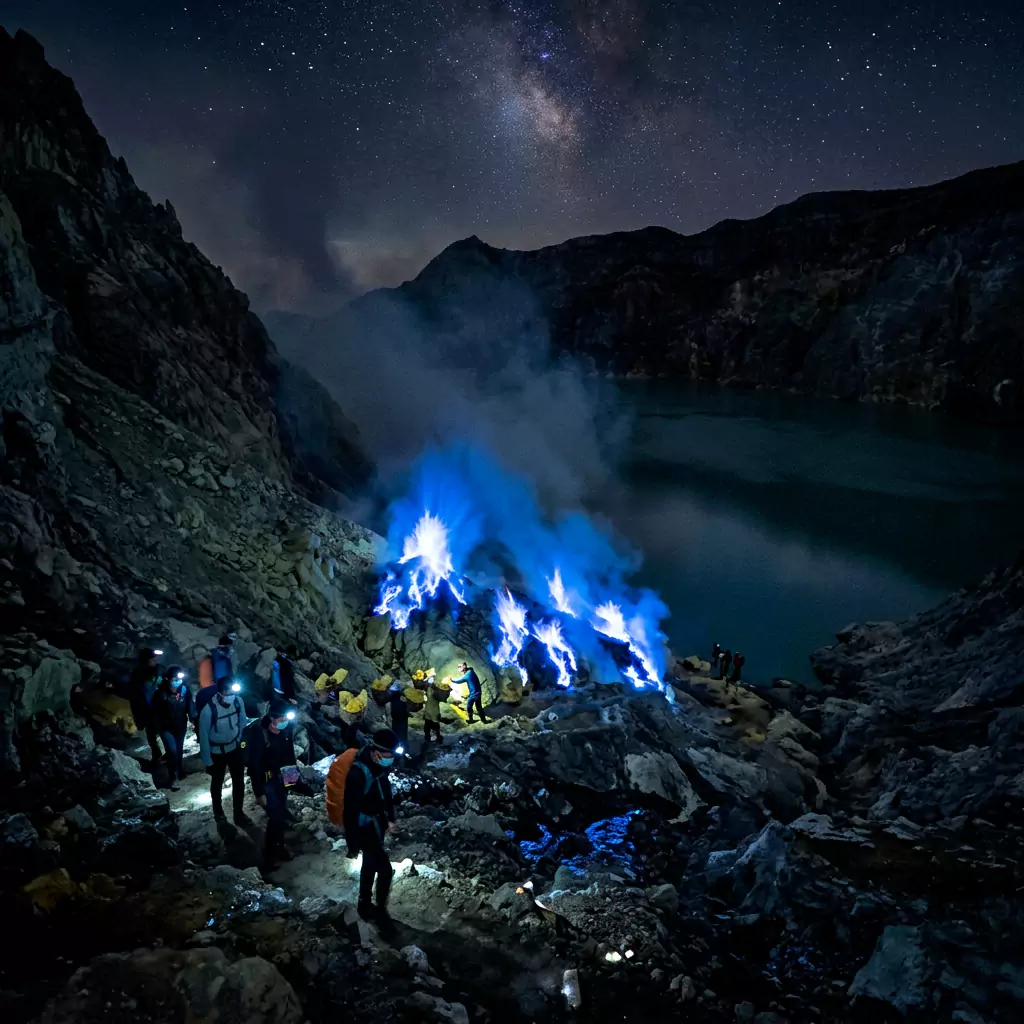
Ijen's Blue Fire — produced by burning sulphuric gases emerging from vents at temperatures exceeding 600°C — creates blue flames up to 5 metres high, visible only between midnight and dawn before sunlight extinguishes the effect.

2,386mPeak Elevation
~0 pHCrater Acidity
85–90%Blue Fire Visibility
◆ Blue Fire Only Here◈ Night Trek◉ Gas Masks Provided

"The blue colour is not reflected light — it is combustion. Molten sulphur burns with a cold, alien beauty that science and poetry struggle equally to describe."

Ijen's blue fire is produced by a precise chain of geological conditions rare anywhere on Earth. Liquid sulphur seeps from volcanic vents under high pressure and ignites upon contact with atmospheric oxygen, burning with a vivid cobalt flame. The effect is most intense between midnight and 4:00 am, after which rising sunlight renders the blue invisible.

🔬
The Chemistry
Hydrogen sulphide gas emerges at 600°C and ignites spontaneously, producing sulphur dioxide and the characteristic blue flame. The same process occurs on Jupiter's moon Io — but Ijen is the only place on Earth.
🌡️
Why Only at Night
The blue wavelength of the flame is overpowered by daylight above 350 lux. Only after dark does the eye perceive the true electric-blue quality — a scientific fact that makes this essentially a nocturnal spectacle.
◆ Scientific Rarity

Only two places on Earth produce visible blue fire — Ijen in East Java and a small site in Iceland. Ijen's is accessible, dramatic, and on a scale that Iceland's cannot match.

23:30Departure
Night Drive to Paltuding
Private vehicle departs Banyuwangi. The mountain road climbs through tea plantations in absolute darkness, the silence of rural Java broken only by the engine.
00:30Trek
3km Ascent by Torchlight
Your guide leads the 3 km trail with 730 m elevation gain. The path winds through subalpine forest before opening onto the moonlit volcanic ridge — a 90-minute moderate ascent.
02:00Blue Fire
Crater Descent & Blue Fire
With gas masks on, descend 300 m into the crater bowl. The blue flames emerge from sulphur vents, casting cold cobalt light across the black rock. Staggeringly surreal.
05:30Sunrise
Crater Lake at Dawn
Ascend back to the rim as first light touches the turquoise lake below. The contrast of the acidic lake against the surrounding volcanic caldera is one of Java's most dramatic dawn views.

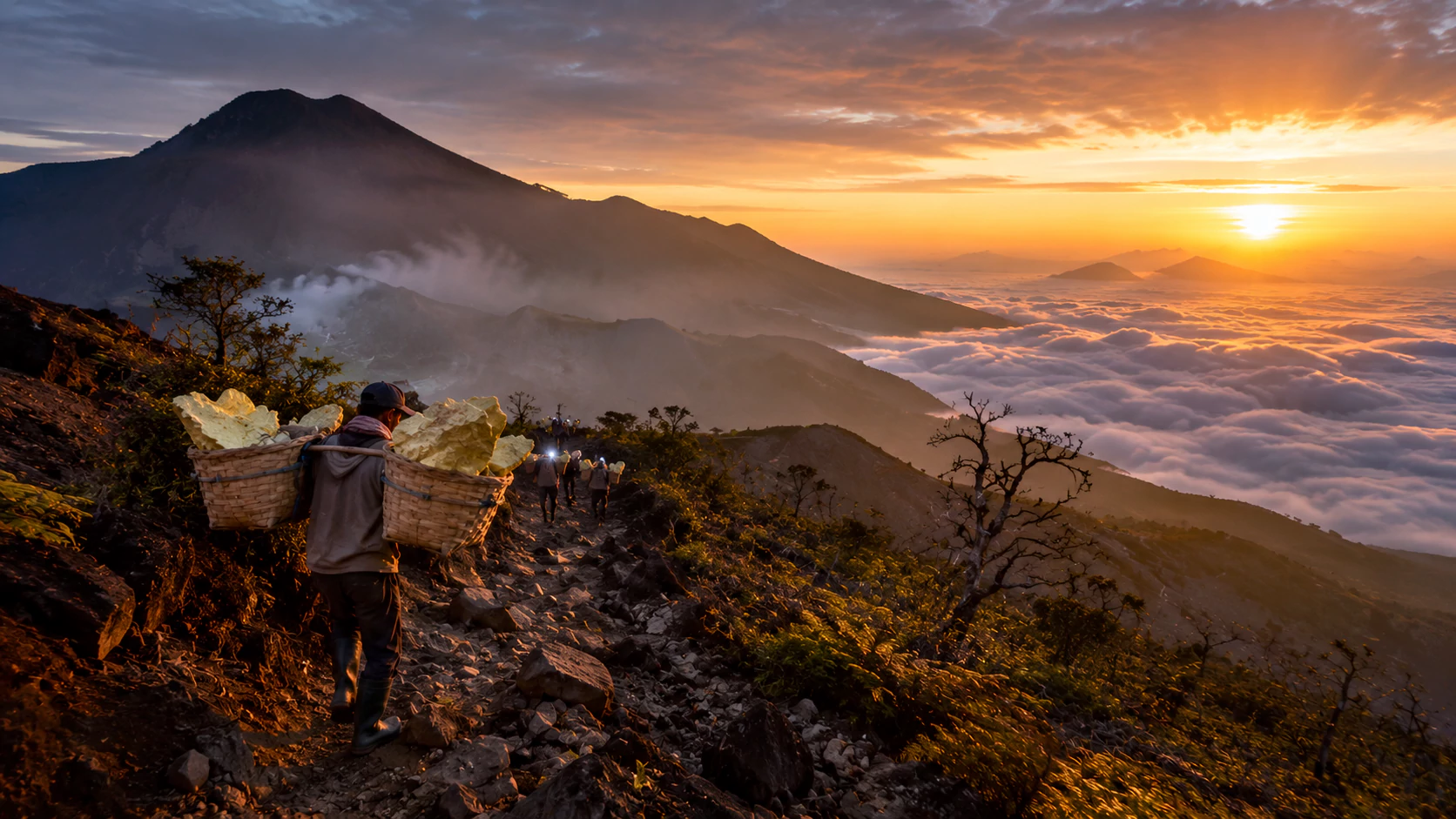
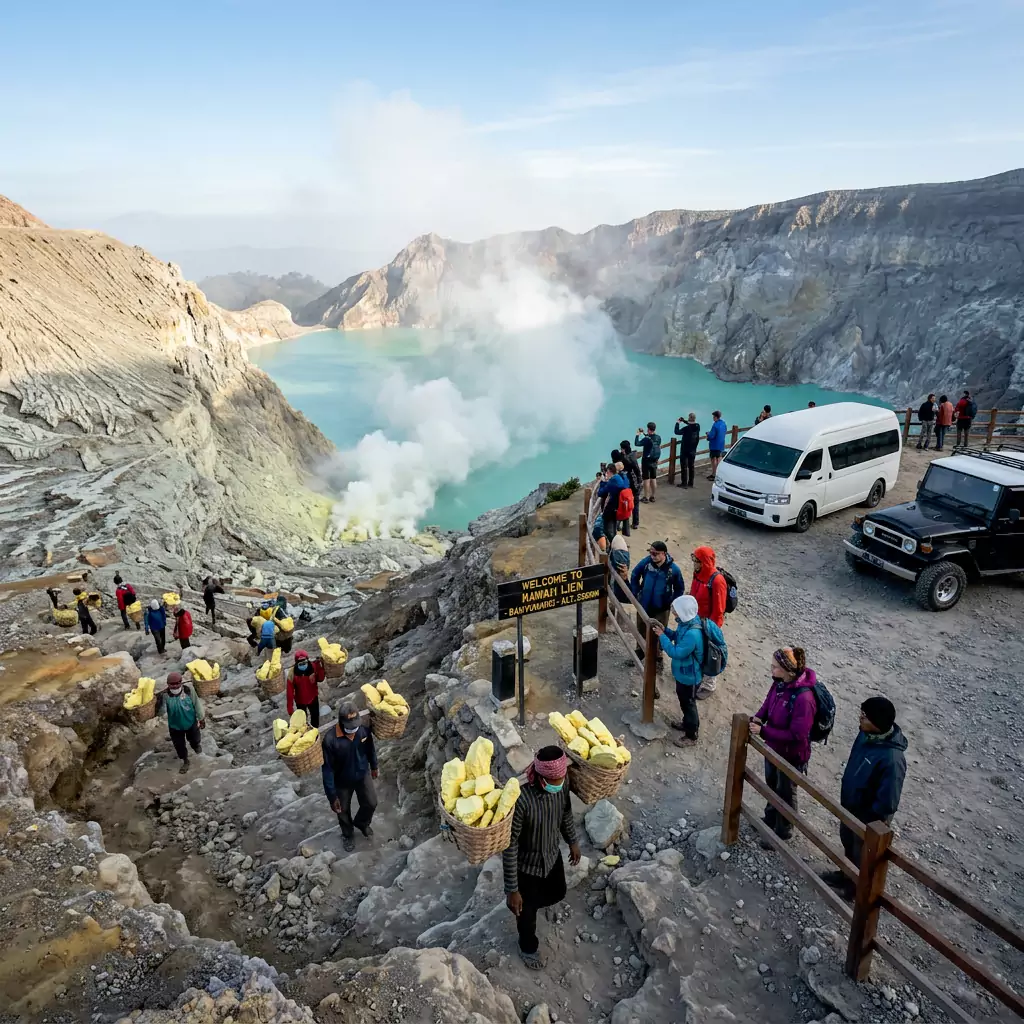
"These men carry 80 kilograms of sulphur on their backs — twice daily — through sulphurous fumes without complaint. They are among the hardest-working people on Earth."

The sulphur miners of Ijen are one of travel's most humbling encounters. Over 200 men descend into the crater daily to harvest solid sulphur from the vents by hand, loading 70–90 kg onto bamboo baskets that they carry — in one continuous journey — up the crater rim and 3 km down the mountain.

◆ Human Spotlight

The Journey encourages guests to purchase yellow sulphur crafts directly from the miners at the summit. These hand-carved figurines represent a meaningful source of supplementary income — a genuine and respectful encounter.
◆ Ethical Encounter◈ Support Local◉ UNESCO Consideration
Experience Ijen's Blue FireIncluded in Ijen Blue Fire, Combination, and Grand packages
Majapahit temple ruins
East Java · Mojokerto Regency · Trowulan
Majapahit Legacy
13th–15th Century · Greatest Hindu-Buddhist Empire of Southeast Asia

"At its zenith, the Majapahit Empire governed a realm stretching from the Philippines to New Guinea — the largest polity Southeast Asia has ever known. Its heart beats still beneath the red-brick fields of Trowulan."

The Majapahit Empire (1293–c.1527) was the crowning achievement of Javanese civilisation — a Hindu-Buddhist maritime superpower whose influence shaped the cultural foundations of every nation across the Indonesian archipelago. At its peak, Majapahit exerted suzerainty over an area comparable to modern ASEAN.

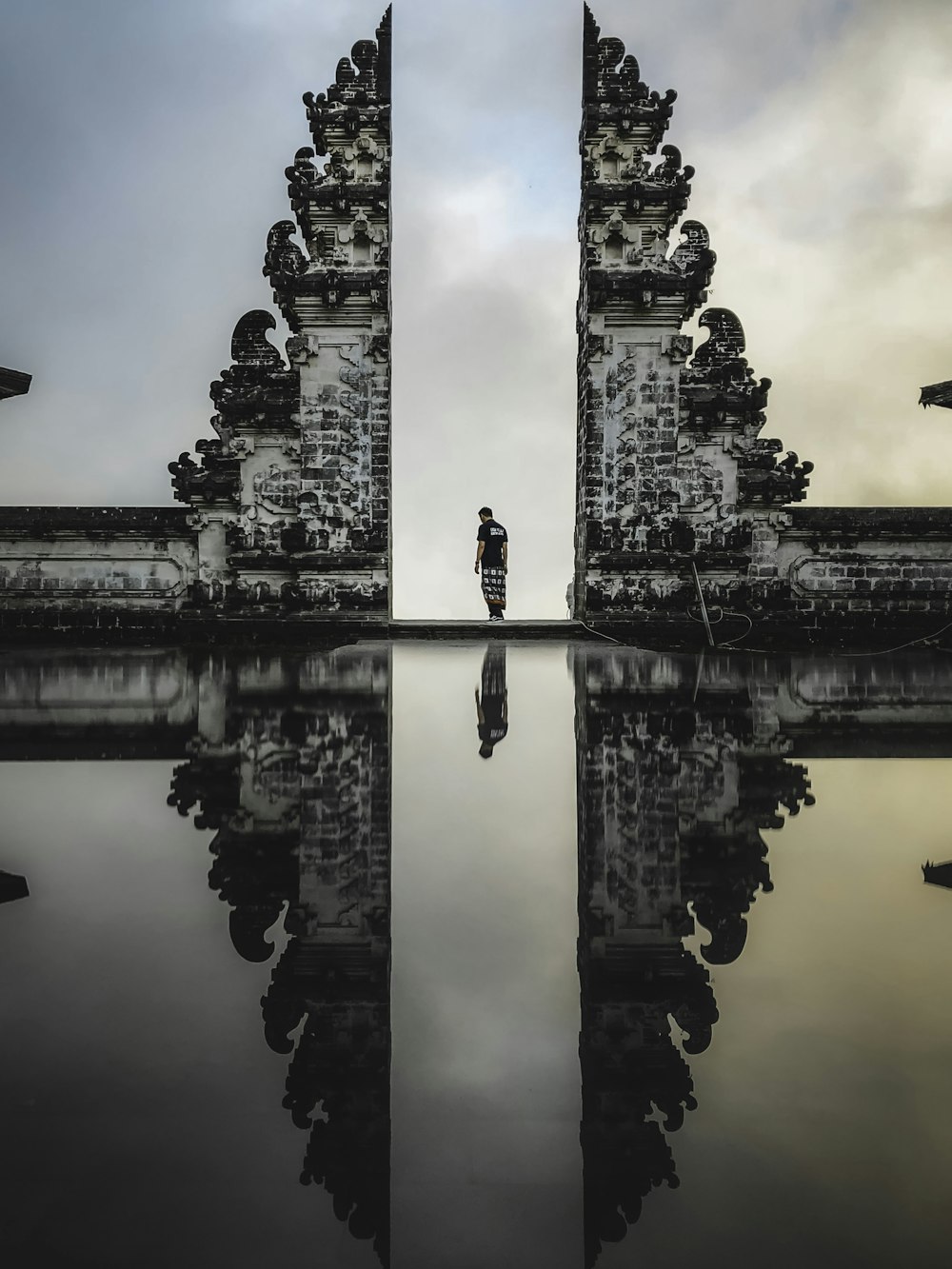
Today, the ancient capital at Trowulan, near Mojokerto, preserves the largest concentration of Majapahit archaeological remains in existence — temples, royal pools, waterways, and the iconic split gates that became the architectural vocabulary of Balinese Hinduism.

1293Founded
98Vassal States at Peak
100km²Trowulan Zone

Majapahit's founding came from one of history's great reversals. In 1293, the Singhasari prince Raden Wijaya offered to guide the Mongol forces against his rival — then, once they were committed, turned his own army against them and drove them into the sea. On the ruins of their defeat he built the Majapahit capital.

The empire reached its golden age under Hayam Wuruk (r. 1350–1389). His minister Gajah Mada swore the famous Palapa Oath — vowing to abstain from spice until all of Nusantara was unified under Majapahit. He largely succeeded.

◆ Historical Spotlight

Indonesia's national motto — Bhinneka Tunggal Ika ("Unity in Diversity") — derives directly from Majapahit texts. This ancient kingdom remains the ideological foundation of the modern Indonesian state.

🏛️
Candi Tikus
A royal bathing complex of extraordinary preservation, featuring miniature temple towers arranged around a central pool — one of the finest surviving examples of Majapahit waterworks.
⛩️
Gapura Bajang Ratu
One of the finest surviving Majapahit gateways (14th century), built in the distinctive red-brick corbelled style — the gate to a compound housing the memorial for King Jayanegara.
🗿
Museum Majapahit
Houses the finest collection of Majapahit pottery, terracotta figurines, bronze statuary, and inscribed stones — essential context for understanding the empire's artistic sophistication.
🌊
Segaran Royal Pool
A vast royal pleasure lake measuring 375 × 175 m — once the centre of courtly entertainment and likely used for mock naval battles. Its scale communicates the empire's ambition.

"Majapahit did not simply vanish. It migrated east — to Bali — carrying its temples, its deities, its music, and its architecture, where they survive intact to this day."

When the Islamic Demak Sultanate ended Majapahit's independence, the Hindu-Buddhist aristocracy, priests, and artists sailed to Bali. This great migration transplanted the entire cultural apparatus of Majapahit to an island where it flourished undisturbed. Balinese temples, offerings, gamelan, shadow puppetry, and even the Balinese calendar all trace their lineage directly to the Majapahit court.
◆ World Heritage◈ Living Culture◉ Foundation of Indonesia
Explore the Majapahit LegacyAvailable as a private day excursion from Surabaya or Malang
Baluran savanna
East Java · Situbondo — Banyuwangi Border
Baluran National Park
250 km² · Java's Africa · Savanna · Mangrove · Volcanic Backdrop

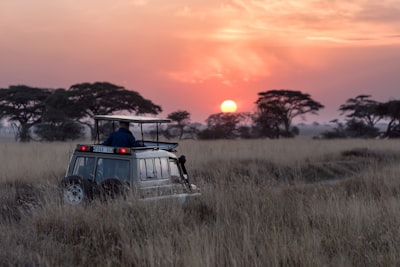
"Drive into Baluran at dusk and you could be forgiven for believing you have arrived in the Serengeti. The Bekol Savanna delivers an East African tableau — but with a smouldering Javanese volcano as its backdrop."

Baluran National Park is East Java's most unexpected natural treasure — a 250 km² wilderness where open savanna meets tropical monsoon forest, mangrove coastline, and the ghostly cone of an extinct volcano. Its centrepiece — the Bekol Savanna — hosts Java's most spectacular wildlife-viewing, especially the golden hour between 5:00 and 6:30 pm when banteng herds drift across the grass against a coral sky.

250km²Total Area
26Mammal Species
155+Bird Species
🐂
Banteng
The wild Javan banteng roams Baluran in herds of 20–80 individuals. Fully wild, powerful, and spectacular at close range — Java's equivalent of the African buffalo.
🦌
Javan Deer
Two deer species inhabit the savanna: the elegant Javan rusa and the shy barking deer. Both are most active at dawn and dusk, when sightings at close range are common.
🦚
Green Peafowl
Baluran holds one of Java's healthiest green peafowl populations. Unlike the Indian peacock, the green peafowl is larger, more iridescent, and increasingly rare.
🐆
Javan Leopard
Baluran's dense forests shelter the critically endangered Javan leopard. Camera traps confirm an active population — their presence signals an intact ecosystem.
🌾
Bekol Savanna
The park's central open plain — best accessed early morning and late afternoon. A 35-metre observation tower offers panoramic views with Mount Baluran as backdrop.
🏖️
Bama Beach
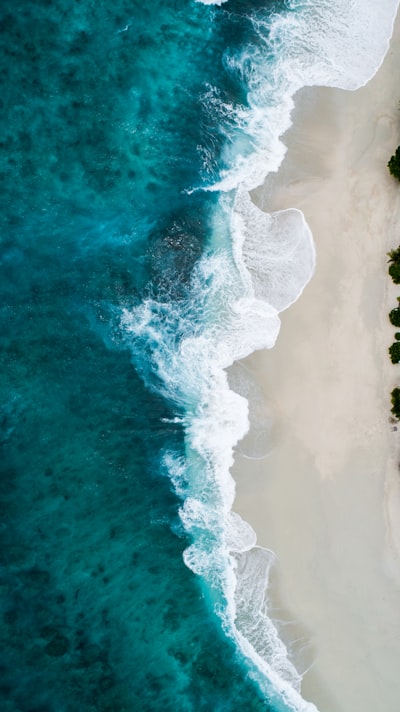
A pristine white-sand beach inside the national park, fringed with mangrove. The surrounding reef is healthy and snorkelling reveals a colourful underwater world.
🌿
Evergreen Forest
A belt of dense, permanently moist forest at the base of Mount Baluran harbours the most secretive wildlife including civets, porcupines, and the elusive Javan eagle-owl.
🌊
Mangrove Estuary
Baluran's coastal mangroves shelter juvenile fish populations and colonial nesting sites for egrets and herons. Boat exploration reveals a labyrinthine waterway of exceptional stillness.
05:00Dawn
Bekol Sunrise & Wildlife
Arrive at Bekol for first light — banteng and deer are active, the air is cool, and early mist over the savanna creates extraordinary photographic conditions.
08:00Morning
Bama Beach & Snorkelling
Walk to Bama Beach for a swim and optional reef snorkelling. The beach is rarely visited before 10am — it is, for a brief window, entirely yours.
16:30Sunset
Golden Hour Safari
Return to Bekol as the light turns amber. Banteng herds reassemble, green peafowl display from the acacia tops, and Baluran volcano glows in the western light.
Safari in Java's Last SavannaPrivate day excursion en route Banyuwangi–Ketapang
Bangsring underwater
East Java · Banyuwangi · Bali Strait
Bangsring Underwater
Snorkelling · Diving · Floating Nursery · Marine Conservation Success Story

"What was once a dying sea has been reborn by the hands of the very fishermen who nearly destroyed it. Bangsring is conservation's most compelling local story."

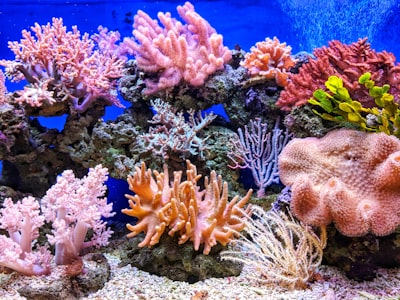
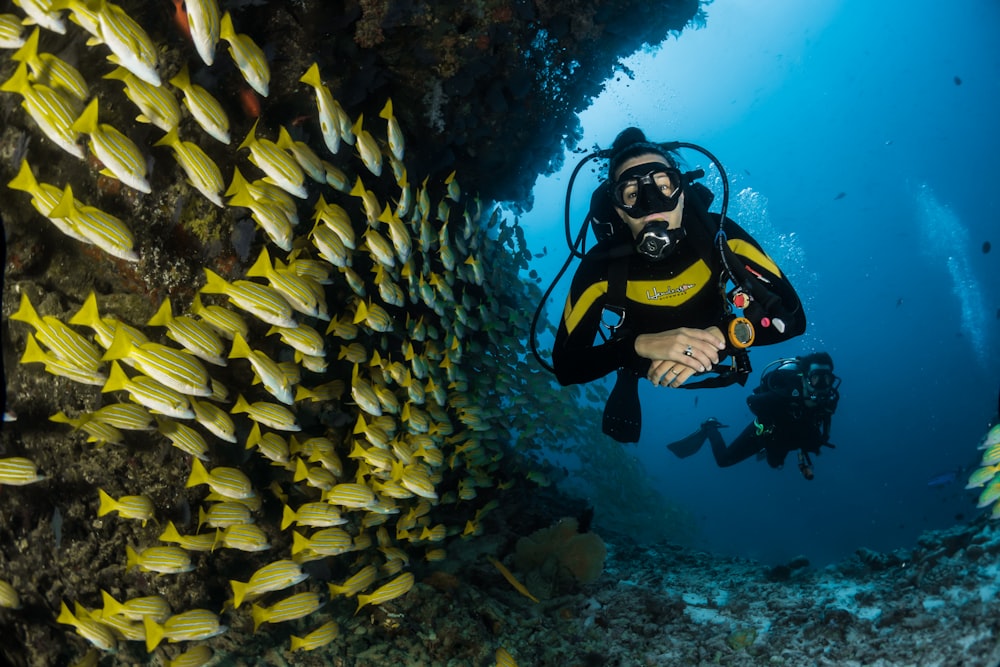
Bangsring is a coastal village 10 km north of Banyuwangi port, home to one of East Java's most celebrated marine rehabilitation areas. The site encompasses a healthy coral garden in 3–12 metres of clear water and a floating fish nursery built from recycled fish traps — a community-run programme that has transformed the local economy and the ecosystem simultaneously.

15m+Visibility
100+Coral Species
3–12mSnorkel Depth
◆ Marine Conservation◈ Community-Run◉ Turtle Sanctuary
🐢
Green Sea Turtles
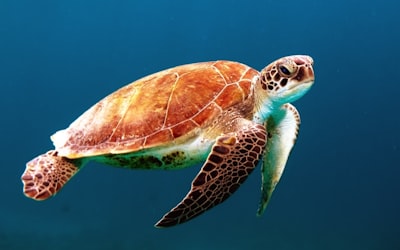
Bangsring hosts a resident population of green sea turtles that feed on sea grass beds adjacent to the reef. Encounters are common and conducted entirely on the turtles' terms.
🐟
Reef Fish Abundance
The nursery programme has dramatically increased juvenile fish populations. Snappers, groupers, parrotfish, and surgeon fish in extraordinary density swarm the floating nursery structure.
🪸
Coral Gardens
The reef includes table corals, brain corals, and staghorn formations in pristine condition. The absence of destructive fishing since 2009 has allowed a decade-long natural recovery.
🦈
Sharks & Rays
Whitetip reef sharks rest under coral overhangs, while stingrays glide across the sandy substrate. Neither is aggressive in this well-protected site.

"A decade ago, the fishermen of Bangsring used bomb fishing and cyanide. Today they are marine park rangers who patrol their own reef. The transformation is one of the most hopeful stories in Indonesian conservation."

In 2009, a group of local fishermen made a collective decision: ban all destructive fishing in a self-designated marine protection area, build a floating fish nursery to rehabilitate juvenile stocks, and pivot to eco-tourism. Within five years, coral cover had recovered to over 60% and fish biomass had increased tenfold.

◆ Conservation Spotlight

Bangsring has won multiple national and international conservation awards and is studied as a model for community-led marine rehabilitation across Southeast Asia. Every visit you make generates direct income for the families who protect the reef.
🤿
Snorkelling
Equipment rental and guided snorkelling over the reef and around the floating nursery. Best morning light is 07:00–10:00. Descend beneath the nursery to see thousands of fish suspended in blue water.
🛥️
Glass-Bottom Boat
For those who prefer to stay dry, the community operates glass-bottom boats over the reef garden. Perfectly suited for families, photography, or simply appreciating the reef from above.
🏠
Floating Nursery Visit
Board the floating platform of bamboo and recycled nets for a guided explanation of the nursery programme and face-to-face encounter with the fish being raised for release.
🌅
Tabuhan Island Transfer
Bangsring is the natural departure point for speedboat transfers to Tabuhan Island, 7 km offshore. Combine both in a single day for an extraordinary marine double experience.
Explore Java's Marine TreasurePrivate half-day excursion from Banyuwangi
Tabuhan Island
Bali Strait · 7 km from Bangsring · Banyuwangi
Tabuhan Island
Uninhabited · Pristine Coral · White Sand Coves · Bali on the Horizon

"Uninhabited, unguarded, and barely known beyond its immediate region — Tabuhan is the kind of island that travel writers are reluctant to describe in print, for fear of the world discovering it."

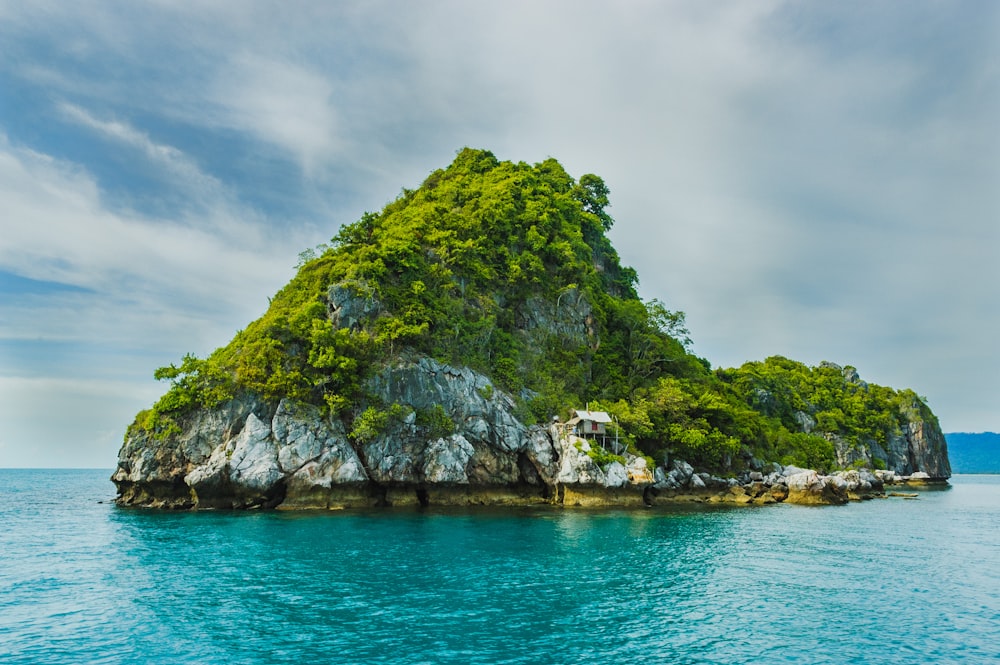
Pulau Tabuhan is a small, uninhabited island 7 km off the Banyuwangi coast in the Bali Strait, accessible by a 20–30 minute speedboat ride from Bangsring. The island is approximately 25 hectares of volcanic rock and white coral sand, fringed with healthy reefs on all sides and crowned with sparse dry forest sheltering nesting seabirds.

What makes Tabuhan extraordinary is its complete solitude, pristine underwater visibility (frequently exceeding 20 metres), and the remarkable view across the strait to Bali's volcanic horizon — Gunung Agung visible on clear mornings like a distant mirage.

20m+Visibility
25haIsland Size
7kmfrom Shore
◆ Uninhabited◈ Pristine Reef◉ Bali Views★ Half-Day
🐠
Pelagic Fish Schools
Strong currents attract open-water species: schools of bluefin trevally, rainbow runners, and — seasonally — manta rays. The channel between Tabuhan and the mainland is a recognised manta cleaning station.
🪸
Pristine Coral Structure
Table corals of extraordinary size — some exceeding 3 metres in diameter — form the structural backbone of the reef. The site has never experienced blast fishing and the coral architecture is undisturbed.
🐙
Macro Life
Tabuhan's sandy patches between coral formations host nudibranchs, ghost pipefish, and octopus in unusual density — equally rewarding for close-focus photography as wide-angle reef shots.
🦅
Sea Eagles
White-bellied sea eagles nest on Tabuhan's volcanic rock outcrops, hunting the strait from late morning. Watching an eagle stoop on fish from the beach while floating in clear water is cinematic.

Tabuhan is reached exclusively by private speedboat from Bangsring harbour, 10 km north of Banyuwangi. The crossing takes 20–30 minutes through the open strait — bracing and exhilarating when the Bali Strait is running.

07:00Depart
Bangsring Harbour
Your private speedboat departs at first light — the crossing is smoothest in the morning. Mount Agung materialises through the haze as you cross the Bali Strait.
07:30Arrival
Tabuhan Landing
Anchor off the western beach — the most sheltered and most beautiful. Wade ashore onto sand so fine it sounds faintly musical underfoot. The island is, for this morning, entirely yours.
08:00Morning
Snorkelling & Beach
Three to four hours of snorkelling, swimming, and beachcombing in complete solitude. Your guide prepares a packed breakfast aboard the boat as the reef rewards your exploration.
11:30Return
Return to Bangsring
Speedboat returns before the afternoon strait current intensifies. Continue overland to Ketapang port for the Bali ferry — Tabuhan as the perfect prelude to Bali.

"Every Grand Java–Bali expedition ends here, in the middle of the strait, with two worlds on the horizon — one known, one awaiting."

Tabuhan Island holds a unique geographic symbolism — sitting precisely between Java and Bali. To visit Tabuhan as the final act of a Bromo–Ijen–Baluran expedition, and then to cross the remaining 7 km to the Bali ferry at Ketapang, is to experience the complete arc of East Java in a single morning.

The Grand Java to Bali Odyssey offered by The Journey is designed around this natural journey: volcano, fire, ancient empire, savanna, sea, and island — five days culminating in a crossing to Bali that transforms arrival into arrival.

◆ Grand Journey Spotlight

Standing on Tabuhan's western beach with Bali's Mount Agung on the horizon and Java's coast behind you is one of the most quietly profound moments in Indonesian travel. It asks you, silently, which direction you want to go — and promises that both answers are correct.

◆ Bali Crossing Gateway◈ Grand Package◉ Last Stop · Java
Claim Tabuhan for a MorningFeatured in the Grand Java–Bali Expedition package

East Java is not a destination. It is a conversation between fire and sea, between the oldest kingdoms and the youngest volcanoes, between what the earth creates and what it consumes.

◆ The Journey · Field Notes · East Java