Situbondo–Banyuwangi Border · East Java · 250 km²

Baluran
National Park

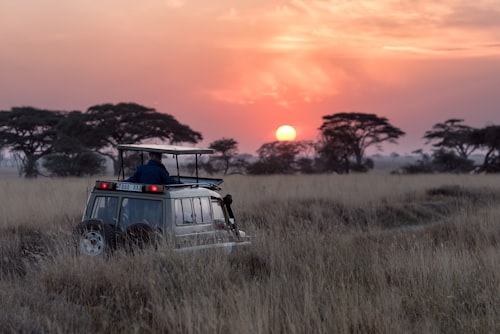
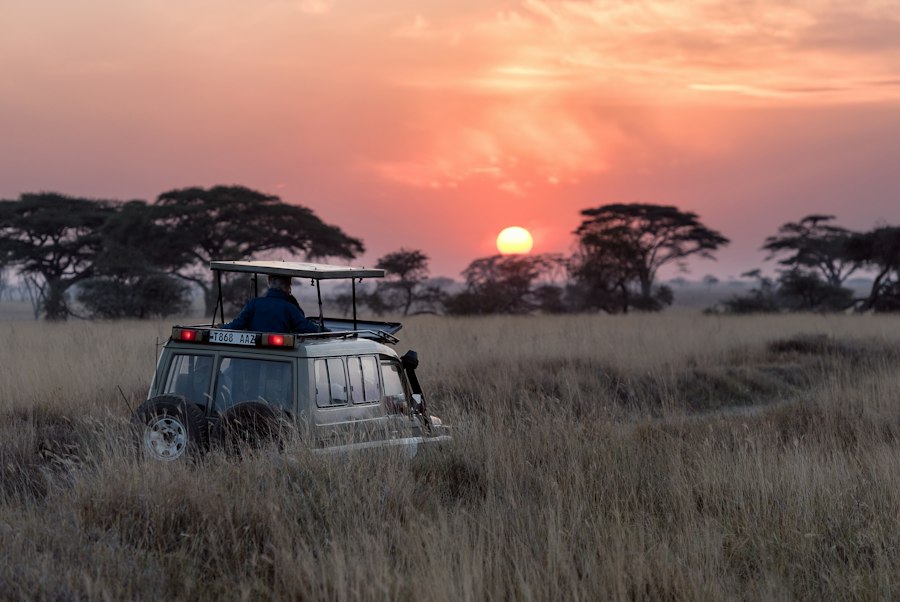
"Drive in at dusk, and you could be forgiven for believing you have arrived in the Serengeti."

250 km²Total Area
26Mammal Species
155+Bird Species
Java's AfricaBekol Savanna
1980National Park Est.
250 km²Wilderness Area
26Mammal Species
155+Bird Species
Year-RoundAccess
The Destination

East Java's
wild African savanna

Baluran National Park is one of the great surprises of Indonesian travel — a 250 km² wilderness tucked into the far northeastern corner of Java that looks, feels, and sounds nothing like the rest of the island. Its centrepiece, the Bekol Savanna, stretches for kilometres of open grass and acacia woodland beneath the ghostly cone of an extinct volcano — an East African tableau transplanted to Southeast Asia.

At dusk, when banteng herds move across the golden plain and green peafowl call from the acacia tops, the scene is unlike anything else in Indonesia. Wild banteng — the ancestor of domestic cattle, and one of Java's most charismatic large mammals — roam here in herds of up to 80 individuals. The experience of watching them at close range from a private vehicle, with no other visitors present, is extraordinary.

Beyond the savanna, Baluran contains dense monsoon forest at the base of its extinct volcano, extensive coastal mangrove estuaries, and the pristine white sand of Bama Beach — where the reef is healthy and the snorkelling reveals a calm, colourful underwater world. The park sits directly on the road between Banyuwangi and Situbondo, making it a natural and supremely rewarding addition to any East Java itinerary.
◆ Java's Africa ◈ Wild Banteng ◉ Bama Beach ★ Year-Round
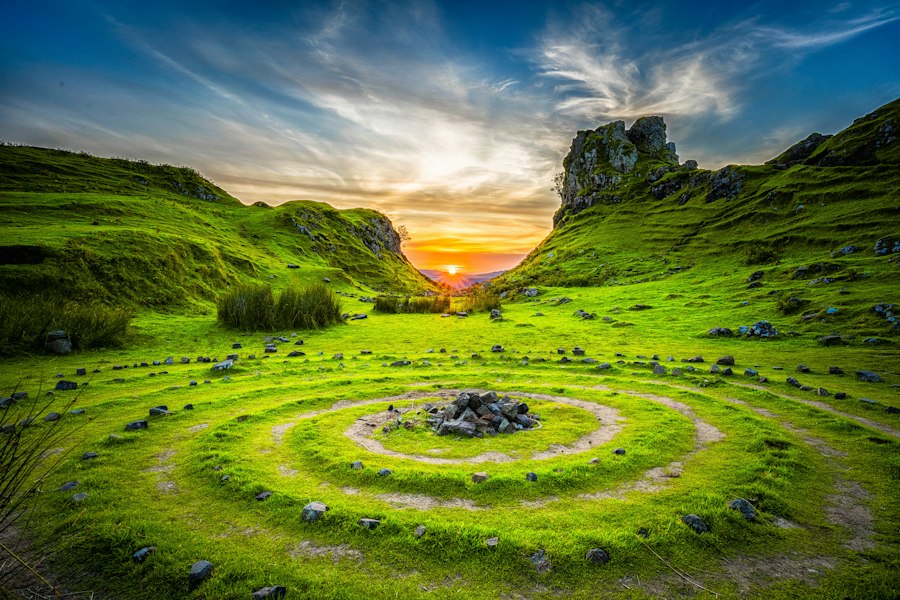
Baluran savanna — banteng herds at golden hour, Java's Africa

Bekol Savanna · Baluran National Park · East Java
The Wild Residents

Java's Most Extraordinary Wildlife

An intact ecosystem supporting charismatic megafauna rarely seen at close range anywhere else in Java.

🐂
Javan Banteng
◆ Vulnerable · IUCN Red List

The wild ancestor of the Balinese cattle — the banteng is Java's most impressive large mammal. Adult bulls stand 1.6 metres at the shoulder and carry sweeping horns. Herds of 20–80 individuals roam the Bekol Savanna, most active at dawn and dusk. A close encounter with a banteng herd — silent, unhurried, utterly wild — is one of the most compelling wildlife experiences in Southeast Asia.

🦚
Green Peafowl
◆ Endangered · IUCN Red List

Far rarer and more dramatic than the Indian peacock, the green peafowl (Pavo muticus) is a bird of genuine spectacle — larger, more iridescent, with an emerald-bronze sheen that catches the light at dawn like hammered metal. Baluran hosts one of Java's last healthy populations. Sightings on the savanna, where the birds display from acacia branches, are common and consistently breathtaking.

🦌
Javan Rusa Deer
◆ Least Concern · Locally Common

Two deer species coexist in Baluran — the elegant Javan rusa and the smaller, more secretive barking deer (Muntiacus muntjak). The rusa, with its heavy antlers and deliberate movement, often grazes alongside banteng on the Bekol plain, creating scenes of improbable richness. Barking deer are heard more than seen — their sharp, dog-like bark echoing from forest edges at dusk is one of Baluran's characteristic sounds.

🐆
Javan Leopard
◆ Critically Endangered · IUCN Red List

Baluran's dense evergreen forest conceals one of the rarest cats on Earth — the Javan leopard (Panthera pardus melas). Camera trap surveys confirm an active population within the park. Sightings are extremely rare and entirely luck-dependent, but the knowledge of their presence transforms the forest edge into something charged with possibility. A functioning apex predator is the ultimate sign of a healthy ecosystem.

🐒
Long-tailed Macaque
Troops of long-tailed macaques (Macaca fascicularis) inhabit the forest margins and beach areas, particularly active around Bama Beach at dawn. Playful, bold, and occasionally demanding of attention — they are reliable company along any forest trail.
🦅
Raptors & Hornbills
Baluran's bird list exceeds 155 species. The Javan hawk-eagle and Oriental pied hornbill are year-round residents. During migration (Sep–Nov), additional raptors pass through — broadwinged hawks, osprey, and occasionally Steppe eagles crossing to Australia.
🐊
Coastal & Mangrove Life
Baluran's mangrove estuaries shelter saltwater crocodiles, monitor lizards up to 1.5 metres, fiddler crab colonies, and nesting egret and heron colonies. The contrast between the open savanna and this dense, tidal wilderness — separated by a few hundred metres — is one of Baluran's most striking ecological qualities.
The Park's Zones

Four Distinct Worlds

Within 250 km², Baluran contains an ecological diversity that most national parks four times its size cannot match.

🌾
Bekol Savanna

The heart of the park — open grass and acacia woodland extending for 5 km, with a 35-metre observation tower giving panoramic views across the plain to the volcanic cone of Gunung Baluran. Best at dawn and golden hour.

🌲
Evergreen Forest

A belt of permanently moist forest encircling the base of Gunung Baluran, fed by springs from the volcanic slopes. This is leopard and barking deer territory — dense, shadowed, alive with bird calls at all hours.

🌿
Mangrove Estuary

Three estuaries along the park's northern coast form a labyrinth of mangrove channels sheltering crocodiles, monitor lizards, and nesting herons. Best explored by boat at high tide, when the channels fill and the forest becomes navigable.

🏖️
Bama Beach

A pristine white-sand beach inside the national park boundary, fringed with casuarina trees and fronted by a healthy reef. Snorkelling reveals clownfish, parrotfish, and banded sea snakes in water rarely visited by more than a handful of people daily.

The Private Safari Day

Dawn to Dusk — Your Safari

Wildlife activity in Baluran is highest at the edges of the day. The itinerary is built around those windows — maximising every golden hour, minimising the flat midday hours.

04:30Pre-dawn
Private Vehicle Departs
Your dedicated vehicle departs from Banyuwangi or Situbondo in the dark. The 40-minute drive to Baluran's Batangan gate passes through sleeping coastal villages and coconut plantation — the park appears without announcement, the forest wall sudden and absolute.
05:15Dawn
Bekol Savanna — First Light
Arrive at the Bekol plain before sunrise. Banteng are feeding at the forest edge in the pre-dawn cool. Green peafowl move across the grass. The sky turns from charcoal to violet to amber as Gunung Baluran's silhouette sharpens against the east. This is the most productive wildlife window of the day — and with a private vehicle, you can stop, wait, and watch on your own terms.
06:30Morning
Observation Tower — Panoramic Vista
Climb the 35-metre observation tower for a complete panorama of the Bekol plain. Banteng herds are visible from here as moving shapes across the grass. On clear mornings, the Bali Strait glitters to the east, and Gunung Agung is faintly visible on the Balinese horizon — East Java's last look at the island to come.
08:00Morning
Bama Beach — Swim & Snorkel
Drive the 3 km track through monsoon forest to Bama Beach. Macaque troops follow the path through the canopy. The beach itself — white sand, casuarina shade, reef just beyond the shallows — is almost always empty at this hour. Snorkel the coral garden, swim, or simply sit in the kind of silence that has become rare everywhere except places like this.
10:30Midday
Lunch at Bekol & Afternoon Rest
Return to the Bekol guesthouse area for a packed lunch. Wildlife retreats from the heat — a natural pause for rest, photography editing, or a guide conversation about what was seen. The midday hours belong to the shade of the acacia canopy and the distant call of hornbills.
15:30Afternoon
Mangrove Estuary — Boat Exploration
A private boat through the mangrove channels of the northern estuary. Monitor lizards rest on exposed roots. Herons stand motionless in shallow water. The channels narrow to tunnel-width in places, the canopy closing overhead. It is a completely different ecosystem from the savanna — and the contrast, experienced in a single day, is one of Baluran's great gifts.
16:45Golden Hour
Bekol Golden Hour Safari — The Main Event
Return to Bekol as the light turns amber. This is the defining moment of any Baluran visit. Banteng herds reassemble on the plain — sometimes 50, 60, 80 animals visible simultaneously. Green peafowl display from acacia tops, their calls cutting through the cooling air. The volcano glows behind them. Your guide stops the vehicle and turns off the engine. There is nothing to do except watch.
18:30Dusk
Return Transfer
Drive back to Banyuwangi or continue to your next destination. The road passes briefly through a landscape that, an hour ago, was extraordinary — and will remain so in memory for considerably longer.
Why Baluran

What Makes It Singular

🌅
The Golden Hour
Between 05:00–06:30 and again 16:30–18:00, Bekol's light transforms the savanna into something cinematic. Banteng move through amber haze. Peafowl glow iridescent. The volcanic silhouette sharpens against a coral sky. Photography here, even with modest equipment, produces images of remarkable quality — not through technique, but through a landscape that is fundamentally photogenic at these hours.
🏝️
Bama Beach — The Secret
Most visitors to Baluran know only the savanna. The beach — 3 km through monsoon forest — is visited by almost no one before 10:00 am. At that hour, it belongs entirely to you: white sand, casuarina shade, macaques in the trees above, and a reef where the snorkelling reveals an abundance that belies the ease of reaching it. It is one of East Java's genuinely kept secrets.
🗺️
Positioned Perfectly
Baluran sits at a natural junction. Coming from Surabaya or Bromo heading east, it is the last great wild stop before Banyuwangi. Coming from Banyuwangi after Ijen, it is the first. Either way, it adds extraordinary value to an East Java itinerary without adding significant distance. The Grand Java to Bali route passes directly through its gate — making it, for many guests, the unexpected highlight of the entire journey.
Essential Knowledge

Before You Depart

🌡️
Climate & Best Time
  • Dry season (Apr–Oct): Best wildlife visibility, shorter grass, preferred
  • Wet season (Nov–Mar): Lush savanna, greener landscapes, still operable
  • Daytime temperature: 28–35°C — lightweight clothing, sun protection essential
  • Dawn temperature: 22–26°C — a light layer for the early vehicle ride
  • Year-round destination — no seasonal closure
👟
Physical Requirements
  • Terrain: Flat safari roads — most exploration done from vehicle
  • Walking: Short, easy walks to observation tower and beach (under 3 km total)
  • Suitable for all ages and fitness levels — family-friendly
  • Boat excursion: 30–45 minutes seated — calm mangrove channels
  • Closed-toe shoes recommended for forest paths; sandals fine for beach
🎒
What to Bring
  • Lightweight, neutral-coloured clothing — dark colours attract insects
  • Sun hat, sunscreen, sunglasses — savanna sun is unsparing
  • Binoculars — transformative for peafowl and raptor spotting
  • Camera with telephoto lens — banteng encounters can be at 50–100 m
  • Snorkel mask (or request from guide) + swimwear for Bama Beach
  • Insect repellent — especially for mangrove and forest sections
What We Provide
  • Private air-conditioned vehicle (Banyuwangi or Situbondo ↔ Baluran)
  • Expert English-speaking naturalist guide throughout the full day
  • All national park entrance and vehicle fees
  • Private mangrove boat excursion (entrance + guide)
  • Packed lunch and bottled water throughout the day
  • Basic snorkel equipment for Bama Beach
  • 24/7 guide support throughout
🗺️
Getting There

Baluran sits directly on the Trans-Java highway between Situbondo and Banyuwangi — approximately 40 minutes west of Banyuwangi and 100 km east of Situbondo. The park gate at Batangan is unmissable; the Bekol savanna is a further 12 km inside on a gravel road.

We recommend pairing Baluran with an Ijen Blue Fire night before or after — the two destinations share the Banyuwangi catchment and create a superb two-day combination: one night, one savanna dawn.

💰
Packages & Pricing
  • Baluran Private Safari Day: Custom pricing — contact us
  • Grand Java to Bali Odyssey (4N/5D): From $3,840 / package — includes Baluran
  • Ijen + Baluran Combination: Available as bespoke 2-day itinerary
  • Prices are per group — up to 4 guests share one vehicle
  • Bespoke pricing for families of 5+ or multi-day combinations
Bama Beach inside Baluran National Park — pristine white sand, coastal forest

Bama Beach · Baluran National Park · East Java

Ecology & Conservation

Java's Last True Wilderness

Baluran was established as a national park in 1980, initially to protect the Javan banteng and its savanna habitat. What makes it ecologically unusual is the juxtaposition of ecosystems in a compact area — open savanna, evergreen forest, mangrove estuary, and coral reef, all within walking or short driving distance of each other. Few protected areas globally contain such habitat diversity at this scale.

The park faces a persistent challenge: the invasion of Acacia nilotica, an African thorn tree introduced in the 1960s for coastal erosion control, which has progressively encroached on the open savanna that banteng and deer depend on. Park rangers and conservation teams actively clear acacia regrowth — a visible, ongoing battle between management and ecology.

The Journey selects naturalist guides for Baluran who have worked in the park for multiple years — individuals who know individual banteng herds, seasonal bird movements, and which mangrove channels the monitors favour at what tide. This depth of local knowledge transforms an already remarkable landscape into something that rewards genuine curiosity.

Java's Africa Awaits

Reserve Your Private
Baluran Safari

A banteng herd at golden hour, a peafowl calling from an acacia — Baluran delivers wildlife encounters that East Java's volcanic drama often overshadows. Don't let it. The savanna deserves a full day on its own terms.

Responds within 12 hours · 100% Private · Expert guides since 2019

Continue the Journey

Other Destinations