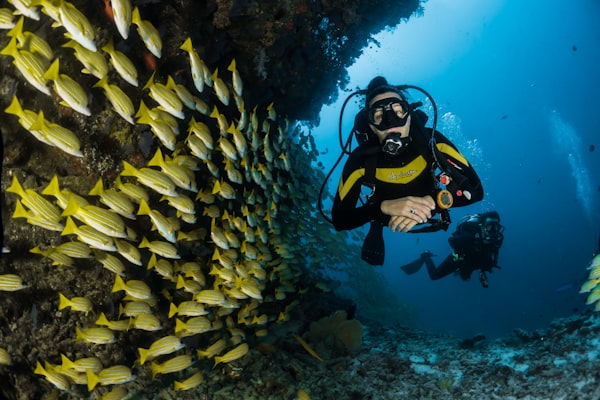
Ijen Plateau · Banyuwangi · 2,386 m
"Where the earth burns electric blue and the lake glows turquoise at the edge of dawn."
Kawah Ijen is one of the most scientifically extraordinary volcanic systems on Earth. Rising to 2,386 metres on the Ijen Plateau, its summit conceals a 36-hectare crater lake of sulphuric acid so concentrated it registers at pH 0.3 — equivalent to battery acid. The lake glows an impossible turquoise at dawn, a colour created by the volcanic gases dissolved beneath its surface.
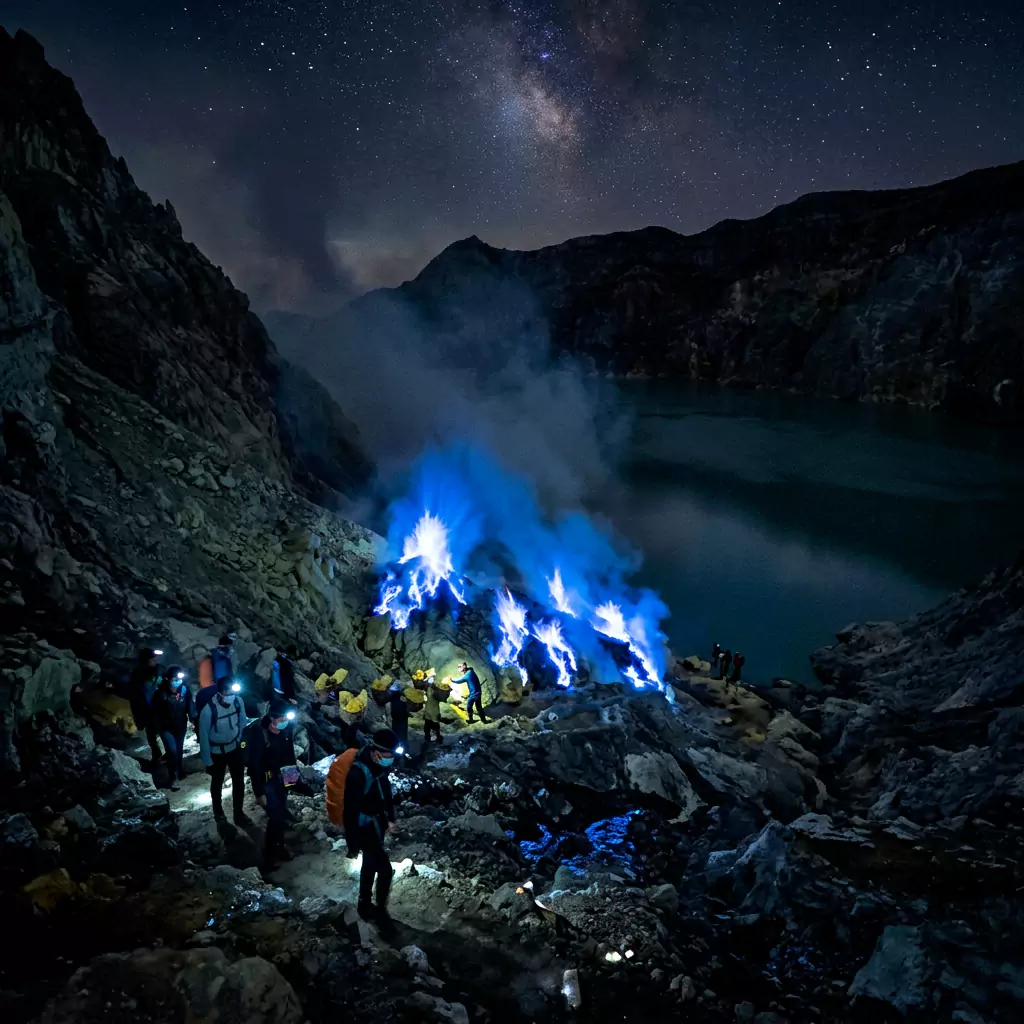
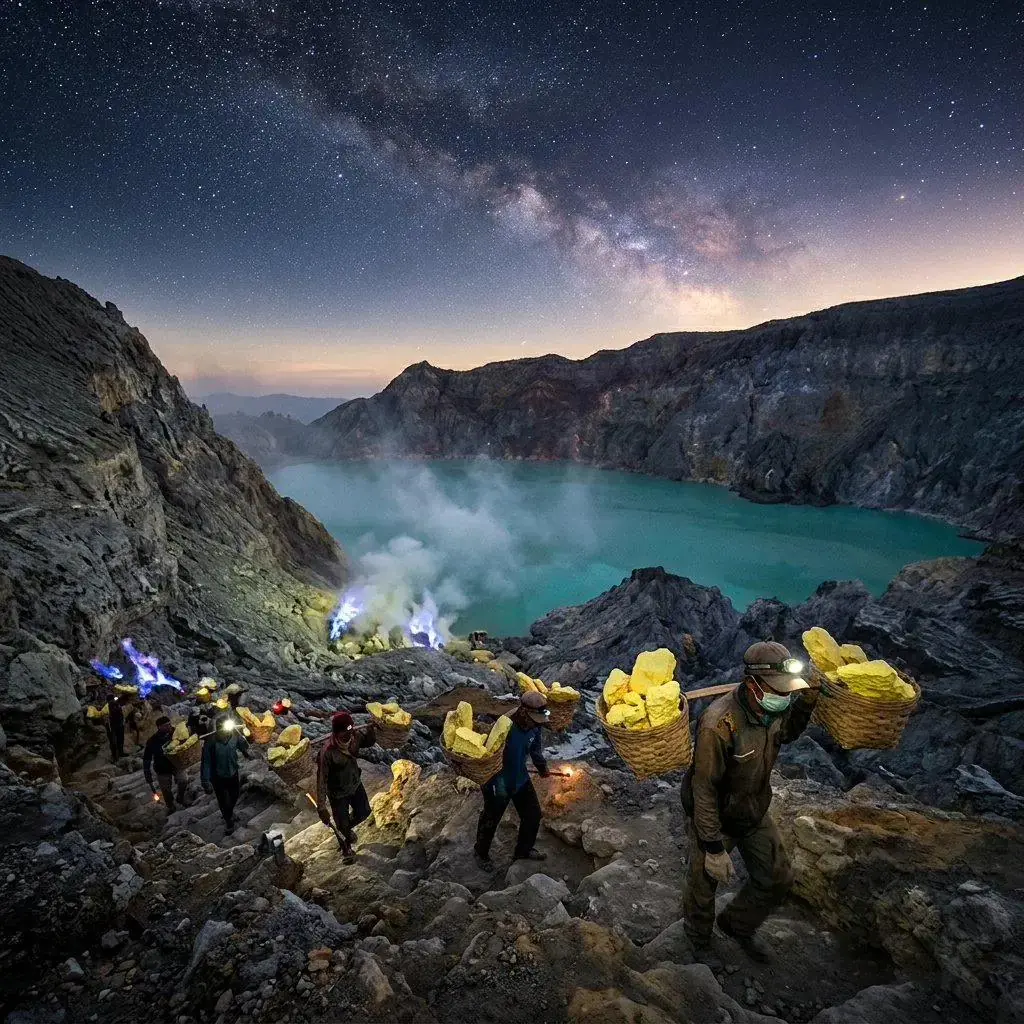
But it is what happens before dawn that makes Kawah Ijen unique among all destinations on Earth. Deep inside the crater, burning sulphur gases ignite on contact with air, producing flames of electric blue that can reach heights of five metres. This phenomenon — the Blue Fire — occurs only at two places globally. Indonesia's Ijen is the more spectacular and accessible of the two.
The Journey operates every Ijen expedition exclusively private, departing at midnight for the crater in a window of several hours before dawn — the only time the blue flames are visible to the naked eye. What you witness here is not a tourist attraction. It is one of the most genuinely alien landscapes remaining on the planet.
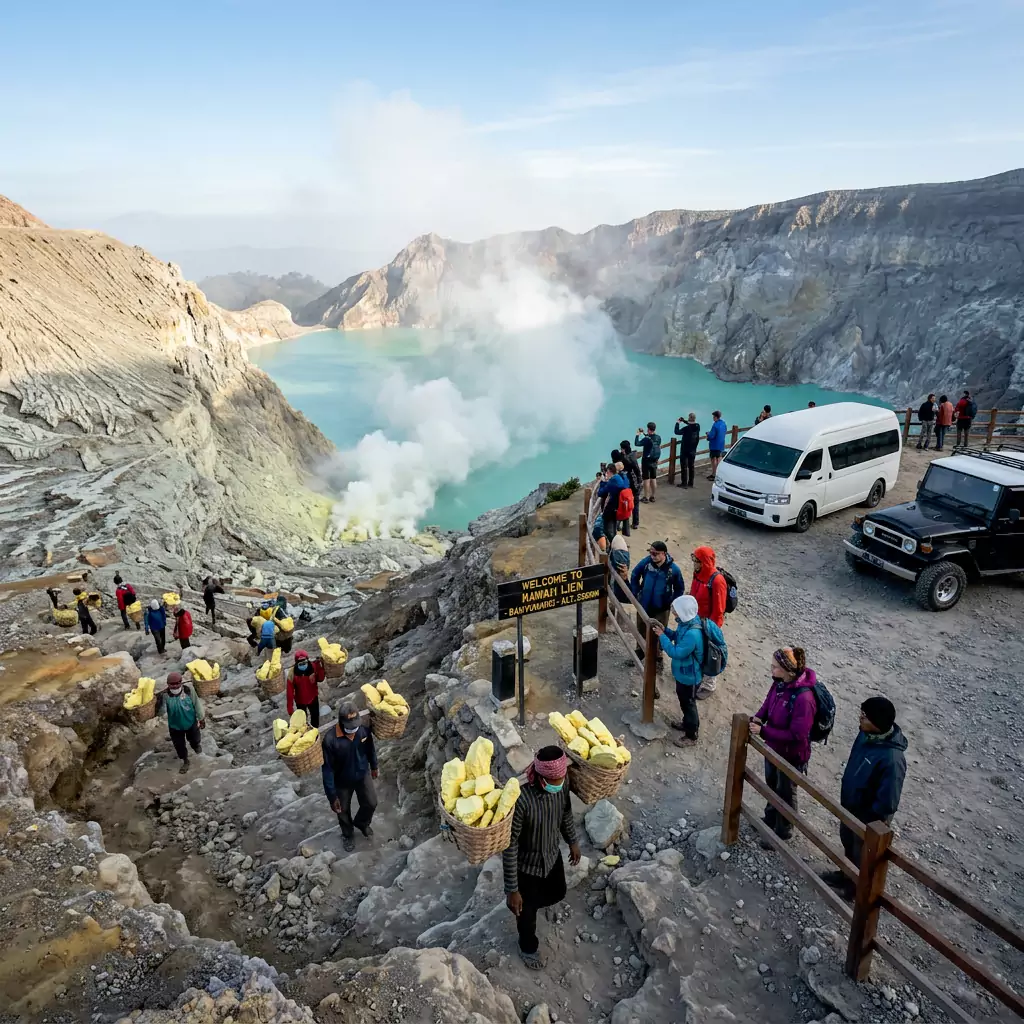
Kawah Ijen Crater Lake · Ijen Plateau · Banyuwangi


Understanding what you are witnessing makes the experience even more profound.
Beneath Kawah Ijen's crater floor, sulphur-rich gases are forced upward under pressure through volcanic vents. When these gases — primarily sulphur dioxide and hydrogen sulphide — emerge and encounter oxygen, they ignite. The resulting combustion burns at temperatures between 200°C and 360°C, producing flames that appear electric blue due to the specific emission spectrum of burning sulphur compounds. This is not lava. It is burning gas.
The Blue Fire window is fixed by physics. Every departure time, every transition, is engineered around that narrow frame of darkness.
Kawah Ijen is an active, closely monitored volcano. The Journey tracks PVMBG alert levels continuously. At elevated levels, we modify the itinerary — limiting crater descent depth or adjusting departure timing — to ensure your safety at all times.
Gas masks are standard equipment for all crater descents. Our guides carry additional masks and are trained in emergency volcanic procedures. We have operated over 800 Ijen expeditions since 2019 without a safety incident.
Sulphur Miners · Kawah Ijen Crater · Daily
Among the volcanic drama of Ijen, the most profound element is human. The penambang belerang — sulphur miners of Banyuwangi — have worked this crater for generations, descending in near-darkness with gas masks tied over their faces to hack blocks of sulphur from the solidified flow channels.
Each load weighs between 70 and 90 kilograms, carried on bamboo shoulder poles up the 200-metre crater wall and then 3 kilometres down the mountain trail to the weighing station. A miner who completes two loads earns the equivalent of approximately $15 USD for a night's work.
Your guide will introduce you to the miners — many of whom have worked the crater for 20 or more years — and facilitate respectful conversation. To stand beside these men, in the blue light of burning sulphur, is to understand something about human endurance that no amount of reading can provide.
The Blue Fire burns for only a few hours each night. Every detail — departure time, gas mask fitting, crater descent route — is calibrated precisely around that window. All you bring is your presence.
Responds within 12 hours · 100% Private · Expert guides since 2019